Leah Archer recalls her first exposure to aphasia through a family friend whose stroke left her unable to speak:
“I remember that she couldn’t talk afterward—she didn’t know how, and there wasn’t a person or program in place to teach her how to regain that ability,” Archer, B.A. ’92, said. “She was eventually placed in a nursing home, where she struggled with depression and never spoke again.”
Aphasia is a language processing disorder that can affect a person’s ability to communicate, most often following a stroke or traumatic brain injury. While it does not impact intelligence, aphasia can make expressing thoughts difficult—those with aphasia know what they want to say but may struggle to get the words out.
Archer trained to become a physical therapist, studying neuroscience and neuroanatomy to better understand the brain and how it responds to traumatic injury.
In that role, she met Kent Emry, a successful entrepreneur whose recovery demonstrated the power of access, resources, and resilience in aphasia rehabilitation.
In 2022, Emry rolled his vehicle in a race car accident, tearing both his carotid arteries and triggering a massive stroke and aphasia.
“The first time I met with a speech therapist, I was asked to say my children’s names—and I couldn’t. That’s how severe my aphasia was,” Emry said. “I can speak now because I had the financial means to attend intensive speech therapy programs, but what about the people who don’t have that kind of money? What’s going to happen to them?”
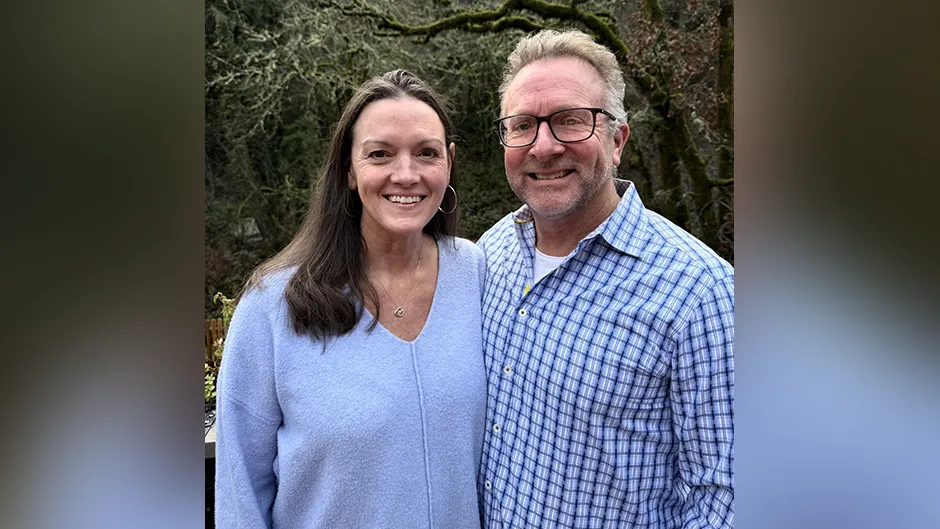
Together, Archer and Emry founded the nonprofit Aphasia Relearned, expanding access to intensive speech therapy and helping to bridge connection and recovery in the aftermath of traumatic brain injury.
“The reality is simple,” Emry said. “People just want to talk again.”
Emry credits Archer and Intensive Comprehensive Aphasia Programs, known as ICAPs, with his recovery and resilience following the accident. ICAPs were created to help individuals relearn how to read, write, or speak after brain injury or stroke.
“To send a single person to an ICAP costs an average of $27,000 in tuition alone,” Archer said. “That does not include the cost of travel—these centers are few and far between—lodging, or daily living expenses. We calculated that filling every existing ICAP to capacity would require about $2.5 million annually.”
“These programs are already proven effective,” Archer added. “But the health care infrastructure hasn’t caught up, and insurance often does not cover this level of care.”
“Watching Kent’s recovery and learning more about these programs showed me firsthand that people can get better,” Archer continued. “The science supports it—neuroplasticity allows for breakthroughs at any stage of recovery, even years after a stroke.”
Neuroplasticity is the brain’s ability to reorganize neural pathways and form new connections in response to injury or experience. It plays a critical role in aphasia recovery as this adaptive process allows language functions to shift to undamaged areas of the brain, improving speech, comprehension, reading, and writing.
“There are 2 million people currently living with aphasia,” Archer said. “And every 40 seconds in the United States, someone has a stroke—so that number is only growing. We’re trying to help people regain the ability to speak, to communicate, and to connect by funding access to life-changing care.”
“Through ICAPs, I was met with encouragement and the support of skilled speech therapists who met me at my level and challenged me to keep improving,” Emry said. “With their help, I found my voice again.”
To learn more about Archer and Emry’s mission to provide care and restore hope for those living with aphasia, visit Aphasia Relearned.