
Through immersive offerings in cities across Europe, Asia, and Latin America, students engage directly with global urban contexts, expanding their design education through cultural exchange, site-based research, and interdisciplinary collaboration.
The University of Miami School of Architecture offers a robust portfolio of international travel programs that reflect its commitment to academic excellence, cultural immersion, and global leadership. These programs provide students with the opportunity to study architecture in some of the world’s most historic and architecturally significant cities, engaging directly with urban environments and professional practices.
The U-SoA Rome Program, led by Professor Carmen Guerrero, invites a select group of honors-level students to participate in a semester-long residency in Rome, Italy every Spring and Fall semester. This immersive experience integrates design studios, architectural theory, drawing, and history, all conducted in situ. Students explore Rome’s rich architectural heritage and contemporary urban challenges through coursework, site visits, and field trips across regions such as Campania, Tuscany, Veneto, Umbria, Lombardy, Basilicata, Puglia, and Sicily. The program promotes a deep understanding of Italy’s built environment and its lasting influence on global architectural thought.
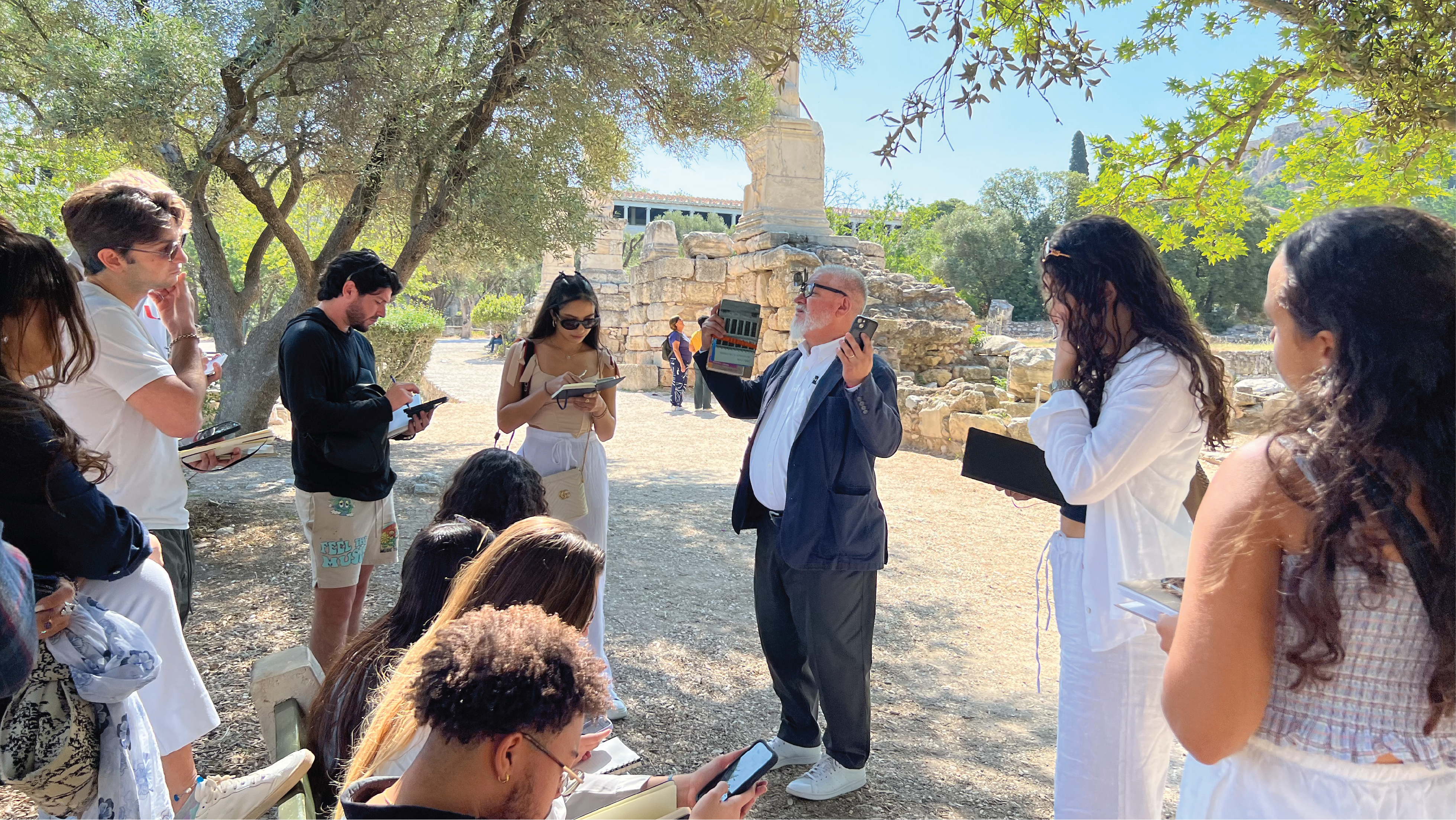
The Grand Tour of Europe, taught by Professor Frank Martinez and faculty director Ana Regalado, is a for-credit summer program open to students from all disciplines in Summer 2026. Through on-site instruction in cities such as Paris, Venice, Florence, Rome, Athens, and Madrid, participants gain a comprehensive understanding of European architectural history and urbanism. The program emphasizes experiential learning, allowing students to engage directly with iconic public spaces and historic structures while enabling interdisciplinary dialogue.

In Spring 2026, the UParis program will offer a full-semester study opportunity tailored for architecture students. Students will attend Parisian universities and institutions, engage with leading architects and design studios, and explore the city’s layered urban fabric. As part of the program, Professor Veruska Vasconez will teach a studio course centered on sustainable design, resilient infrastructure, and cross-cultural exchange, preparing students to address contemporary urban challenges through innovative design strategies.

The Open City Studio: Tokyo, taught by Professors Steven Fett, Edgar Sarli, and Adib Cure will reconvene in Tokyo, Japan in Summer 2026. Open to both undergraduate and graduate students, this itinerant workshop explores the influence of folklore, popular culture, and vernacular traditions on urban form and identity. Since 1990, the studio has documented cities worldwide through a distinctive mix of digital and hand-drawn illustrations, capturing architecture, public spaces, flora, fauna, and cultural narratives. In Tokyo, students will examine the relationship between architecture and culture, documenting and composing the stylistic and constructive characteristics of the city’s vernacular and folkloric traditions.
Together, these international offerings exemplify how the School of Architecture prepares students for leadership in a globalized profession. By engaging with multicultural cities, cultures, and design practices, students expand their intellectual horizons and develop the skills necessary to shape more welcoming andresilient urban futures.