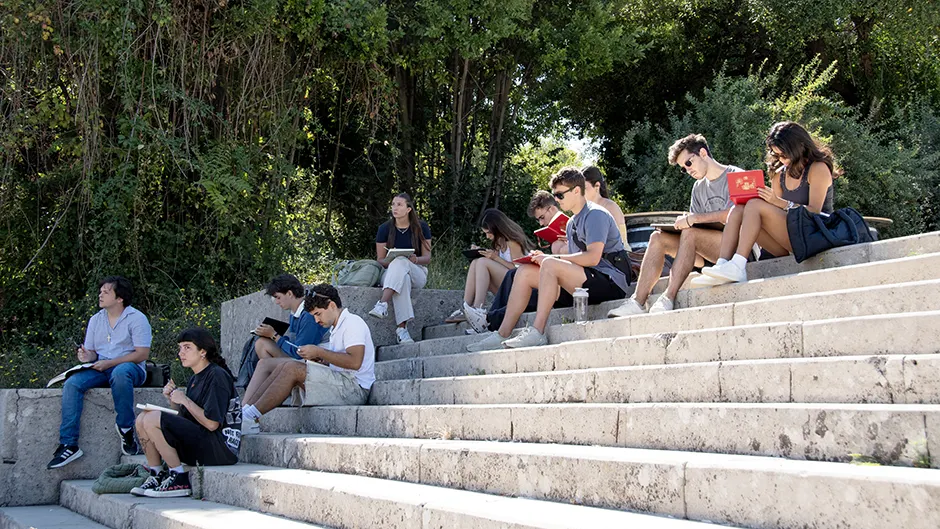
The Tom Spain Rome Program was born from its namesake philanthropist’s first trip to Rome in 1999. The architecture professor said the experience felt like a kid being in a candy store.
Spain absorbed the city’s beauty and timeless atmosphere the best way he knew how—with pencil, ink, and watercolor on paper and canvas. Awestruck by the juxtaposition of ancient ruins and modern design, he has since returned to the city more than a dozen times to continue his artistic and architectural exploration.
In 2010, Spain created the Tom Spain Rome Program Endowment to offer future generations of aspiring architects the same lifechanging experience. Each semester, the program supports 30 students in their studies across Rome, Venice, and Florence, Italy, guided by expert lecturers, historians, and academics.
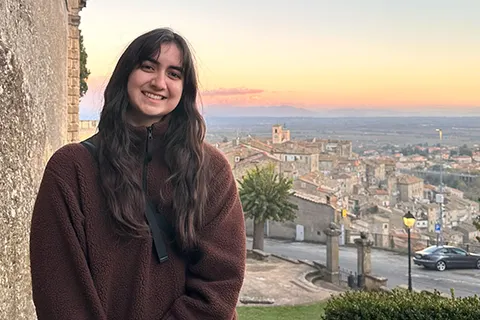
For recent graduate Catalina Cabral-Framiñan, the program offered moments of beauty and reflection that echoed its founder’s experience. She recalls sketching the city’s buildings at dusk, watching people navigate their lives through ancient and modern structures.
“Rome has shown me how cities can be historically multilayered,” Cabral-Framiñan said. “Through the reuse of spolia—ancient materials and architectural elements incorporated into new structures—even contemporary construction carries traces of the past. These materials tell the story of both architectural evolution and the city’s human history.”
Today, she continues her global education in Japan on a travel grant from the Architectural League of New York.
For School of Architecture alumnus Tate Nowell, the Rome experience opened his eyes to the history embedded within the built environment. His favorite memory was visiting the Festival des Cabanes at the Villa Medici in Rome’s historic center.
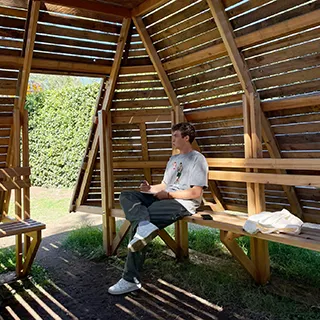
“The installation asked us to question our relationship with nature using five wooden huts, each with its own architectural style and approach,” he recalled. “The weather was great, the gardens were beautiful, and the wooden huts were very fun to sketch.”
Nowell currently works as a designer at a Miami-based architectural design firm specializing in environmental modernism.
Although alumnus Nick Tournour completed the Rome Program in 2024, his mind often returns to the Basilica of Santa Maria Maggiore—a place that deepened his understanding of architecture’s power to shape emotion and experience.
“The interior of the basilica merges the sacred and religious with architecture and design—from the mosaics and gilded ceilings to the interplay between shadow and light,” Tournour said. “Standing in places like the Pantheon, Colosseum, or Roman Forum gave me a profound appreciation for the craftsmanship, scale, and intention behind these structures—lessons that no textbook could convey.”
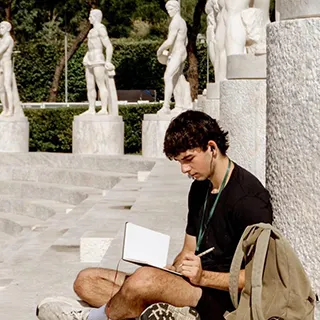
Tournour recently completed an internship with the L’Institut Paris Region, the largest public planning firm in Europe, where he advanced research into sustainable architecture and urban design.
Carmen L. Guerrero, associate professor of professional practice in the School of Architecture and director of the Rome Program, designed the curriculum to encourage students to reconsider the relationship between past and present—and to reimagine how history can inform the architecture of tomorrow.
To learn more about the program or support its mission to advance creative architectural education, visit the School of Architecture’s website
