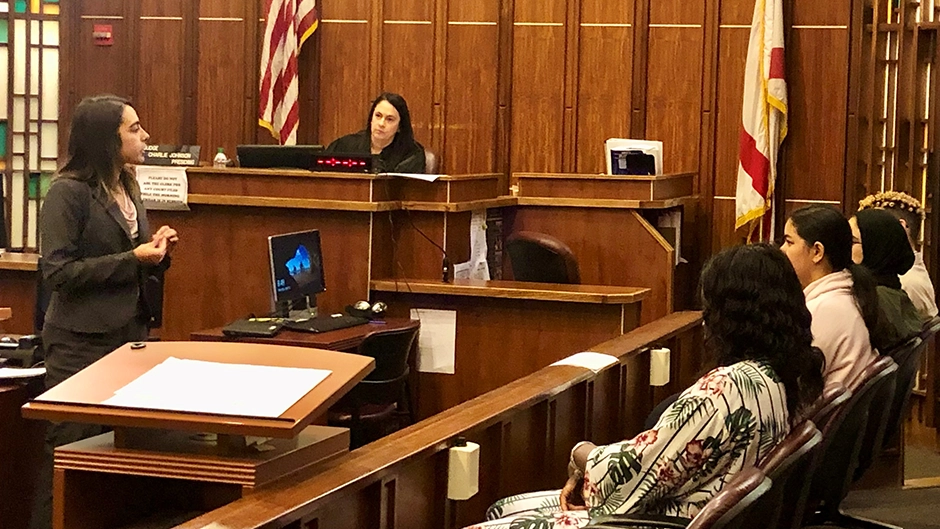
For many aspiring lawyers, the idea of stepping into a courtroom can feel daunting. While the core of legal education lies in the classroom, law students need practical skills to navigate the complexities of litigation both inside and outside the courtroom. The University of Miami School of Law's Litigation Skills Program bridges this gap, offering a unique, hands-on experience that goes far beyond traditional classroom learning.
The program's approach is best described by current student Fernando Yzquierdo, 3L, who notes that it is “unlike any other class offered by the University.” Where most courses focus solely on reading and memorization, the program’s weekly assignments are centered on simulated, real-world scenarios. The immersive style, as well as completing Litigation Skills I and becoming a Certified Legal Intern through the program, enabled Yzquierdo to practice trial skills, including direct and cross-examinations, preparing him for the challenges of his summer externship position as a CLI at the Miami-Dade Public Defender's Office.
From the Classroom to the Courtroom
While many law school activities—from moot court to trial team—provide a controlled environment with pre-written facts, the real world of litigation is anything but. Yzquierdo's experience arguing bond motions in front of a judge taught him the difference. “On my own two feet in front of a judge, using only an arrest form written against my client,” he said, “the only way to ensure that I was being an effective advocate was to think creatively outside of the box.”
The need for creative, on-the-spot thinking is a core lesson of the program. It forces students to move beyond the materials provided and learn how to uncover additional facts, address a judge's concerns, and even negotiate with the prosecution. This type of experiential learning is a cornerstone of the Litigation Skills Program, preparing students for the unpredictable nature of actual court proceedings.
The Power of Practice and Alumni Mentorship
The value of this practical training is echoed by School of Law alumnus and Litigation Skills adjunct faculty member Joseph Nascimento, J.D. '09. As a student, Nascimento credits the program with helping him find his calling as a criminal defense attorney. “Lit Skills gave me the skillset and confidence to stand in a courtroom and advocate for my client,” he said. “As a young lawyer, I was trying serious felonies, including murder cases, within the first two years out of law school. I would never have had that opportunity or ability to do so without the lessons I learned in Litigation Skills,” said Nascimento, citing his experience as a CLI as giving him a significant advantage as a new lawyer.
The program's alumni network plays a key mentorship role. Nascimento's own career is a testament to this: his performance in the program led to a job offer from his pre-trial instructor, a role he has held for 16 years. He is now a managing partner at the firm Ross Amsel Raben Nascimento. This is not a unique experience; the program’s strong ties to the legal community often lead to job opportunities for students. Many graduates are hired by the very firms or offices where they interned, turning their practical experience into a successful career launchpad.
The Human Element of Advocacy
Perhaps the most impactful lesson for both Yzquierdo and Nascimento is the responsibility of representing real clients. Yzquierdo describes the pressure of advocating for a client in custody as “incredibly demanding,” yet also “an especially rewarding experience. The opportunity to make a tangible and meaningful difference in a client's life is one that I'll not soon forget.”
Program director Jeannie Jontiff said, "The Litigation Skills Program is founded on the belief that litigation skills are developed through experience—not inherited. By litigating cases from start to finish, receiving real-time feedback, and learning through close mentorship, students gain the hands-on training that today's employers value most."
A Legacy of Alumni Involvement
The strong alumni presence is what makes the Litigation Skills Program truly exceptional. Many of the adjunct faculty, including Nascimento, are graduates of the School of Law and respected attorneys and judges. They bring real-world pressures and ethical considerations into the classroom, using their extensive experience to provide invaluable mentorship. They also consistently update the curriculum based on feedback from current students and recent graduates, ensuring the program remains relevant to the challenges young lawyers face today.
“I think our program is so strong because of our adjunct faculty roster,” said Nascimento. “Additionally, the opportunity to become a Certified Legal Intern and speak on the record, take depositions, and try cases as a law student provides an invaluable experience that goes unmatched when it comes to preparing our students to hit the ground running upon graduation.”
The strong alumni-student bond continues with Yzquierdo and Nascimento. Yzquierdo was just hired by Nascimento to work as a law clerk in his firm, demonstrating the Litigation Skills full-circle impact.
Read more about Miami Law’s Litigation, Arbitration, and Dispute Resolution area of study.
