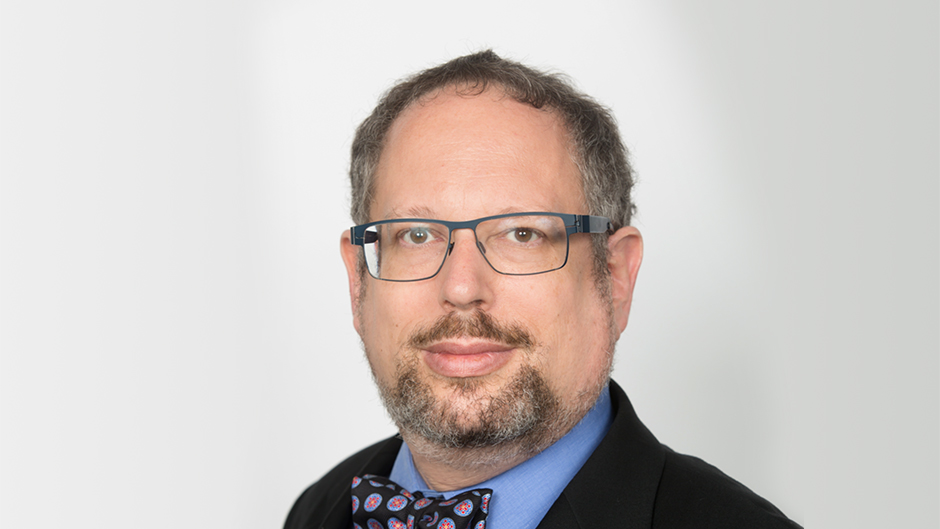
The University of Miami School of Law is offering a new course, the 2025 Constitution Crisis Seminar Series, which provides a scholarly exploration of fundamental challenges to American constitutionalism. Organized by Laurie Silvers & Mitchell Rubenstein Distinguished Professor of Law A. Michael Froomkin, the course features a distinguished group of legal scholars, practitioners, and public intellectuals who examine how our legal system, federal power, and individual constitutional rights are being tested and evolving.
The weekly topics examine issues ranging from immigration and government spending to the role of civil society and the judiciary, providing an in-depth look at how these actions test the limits of our constitutional framework. Almost all of the lectures in the seminar are being published online on a weekly basis.
“I created this seminar to look at the legal system’s ongoing reaction to this massive reordering of federal power and individual constitutional rights, with a focus on the legal system’s reaction to current controversies,” said Froomkin. “In addition to placing current events in historical context, we are looking at the theoretical and structural constitutional causes for the crisis and what we might do to prevent a repetition or undo its most malign effects.”
A framework for understanding constitutional debates
Understanding the boundaries and development of our constitution is of utmost importance for legal professionals and aspiring law students.
The series kicked off in the first week of classes with a foundational lecture by Princeton University Professor Kim Lane Scheppele, an expert on democratic structures. In her talk, "What is a Constitutional Crisis?", Scheppele offered a framework for understanding potential pressures on democratic institutions. Her lecture provided a broad context for specific topics that would be discussed throughout the series.
Seminal seminar lineup
The series has continued with a comprehensive schedule of topics led by a group of distinguished legal experts. Each session is designed to explore a specific facet of constitutional issues.
On August 25, Peter Shane from Ohio State University’s Institute for Democracy discussed "The Unitary Executive & Its Critics," a concept that suggests the President has complete control over the executive branch. This was followed by a session on September 8 with Harvard's Mark Tushnet on "Constitutional Hardball," a term for using legal tactics to push the boundaries of constitutional law.
The next series moved into specific policy areas, beginning with tariffs, led by George Mason University’s Ilya Somin and Yale Law School's Harold Hongju Koh, tackling "Assertions of Emergency Power," while the issue of "Immigration Control / Rendition" is addressed by the ACLU's Cody Wofsy.
Not all the speakers have agreed that we are currently in a true constitutional crisis. For example, Professor Tushnet suggested that ‘hardball’ is a constant feature of the U.S. system. Professor Koh’s view was that it was too soon to say we were in a crisis situation—much would depend on events and especially Supreme Court decisions, in the coming year.
As the fall semester progresses, the seminar will examine the mechanics of executive control, with the CATO Institute’s Thomas Berry speaking on October 13 about "Removals of Officers & Inferior Officers, Bureaucratic Control (Schedules F & G), Vacancies Act." This will be followed by Zachary Price from UC Law in San Francisco on October 20, who will discuss "Impoundments & Other Fiscal Control Strategies," shedding light on how presidents can influence government spending.
The series will also address the executive's relationship with civil society and the courts. On October 27, the University of Chicago’s Genevieve Lakier will present on "Attacks on Civil Society (Law Firms, Universities, NGOs)." A week later, on November 3, Georgetown Law’s Stephen Vladeck will lead a session on the "Role of Courts / Attacks on Courts," a significant topic given the increased scrutiny of the judiciary.
The series will conclude with forward-looking discussions. On November 17, Stanford Levinson of Harvard Law will present on "Formal Correctives Including Constitutional Reform," exploring potential solutions to current challenges. Finally, Columbia Law’s Bernard Harcourt will close out the series on November 24 with a reflection on "Life During a Constitutional Crisis," offering a perspective on what it means to live in a time of constitutional uncertainty.
“The goal of this series is to examine how the legal system, primarily the courts, but also other institutions such as the bar and civil society, have reacted to these new challenges, and what law and legal theory have to offer as to their causes and perhaps cures,” said Froomkin.
Visit the seminar playlist on YouTube – with new lectures added weekly.
