The effort is part of the school’s experiential offerings, training tomorrow’s lawyers with real-world skills in advocacy and litigation.
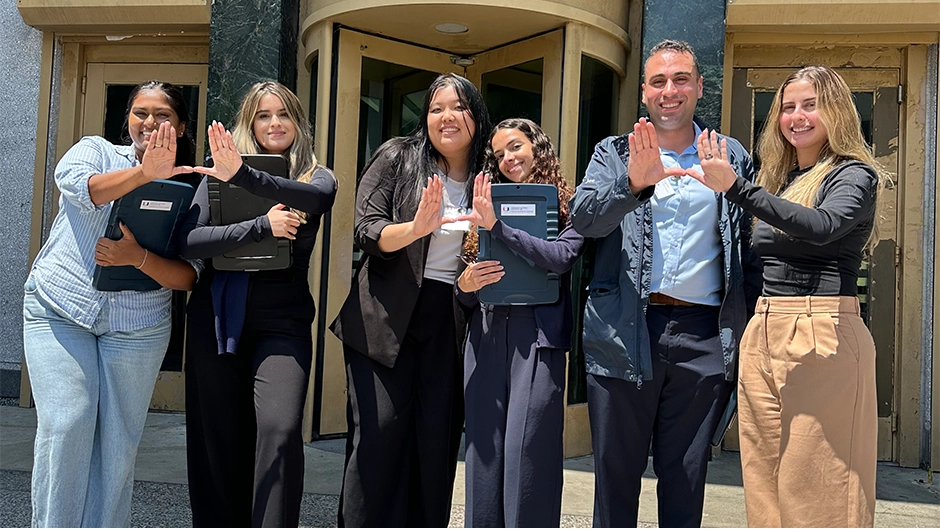
In response to a shifting immigration landscape, seven students from the University of Miami School of Law's Immigration Clinic held a "Know Your Rights" workshop for approximately 70 people detained at the Federal Detention Center in Miami. The student participants included Amy Mantilla, Kadia Mohammed, Sienna Rodriguez, Hannah Liu, Micah Zebersky, Maria Alonso, and Joe Korzeb.
The event marked the first time such a presentation has been offered at the facility. The students advised detainees of their rights, screened them for potential legal remedies, and gave them pro se materials to help them learn about immigration benefits. Following the session, the clinic offered to represent some individuals with upcoming court hearings.
Through the workshop, students acquired firsthand skills in immigration law advocacy—a unique opportunity available in Miami with the FDC, located thirty minutes from the law school, and near two immigration courts and two other immigration detention centers.
Uncovering systemic barriers
During the workshop, students observed the significant legal hurdles that unrepresented individuals face while in FDC custody. These challenges include difficulties gathering evidence, coordinating with witnesses, and filing applications with the Immigration Court.
“The experience reminded me that there is an extremely high unmet need for legal representation in immigration cases,” said 3L immigration clinic fellow Korzeb. “The system is overwhelmed to the point that people with meritorious claims simply are not able to get the representation they need.”
Alonso, another 3L fellow, was surprised by the backgrounds of the detainees. “I was struck by how many of the people I met were actually legal permanent residents—green card holders—who have lived in the U.S. for many years,” Alonso said. “It was heartbreaking to see so many lives turned upside down.”
The U.S. Bureau of Prisons began detaining immigrants at the FDC earlier this year after immigration enforcement increased in Florida.
A history of advocacy
Established in the fall of 2009, the Immigration Clinic allows students to advocate for immigrants in a variety of complex legal proceedings. Students in the clinic represent clients in immigration court and collaborate with immigrant rights organizations on projects aimed at legal reform and social justice. The clinic is an active part of the human rights advocacy community in South Florida and nationwide. It has previously conducted similar "Know Your Rights" presentations at other facilities, including the Baker County Detention Center, the Monroe County Jail, and the Glades County Detention Center.
“I’m very impressed with the enthusiasm of the students to hit the ground running so early in the semester,” said associate director and lecturer Andrea Jacoski. “I found their solidarity with directly impacted people to be moving.”
Read more about Miami Law’s Immigration Law area of study.
Read more about Miami Law’s clinics.