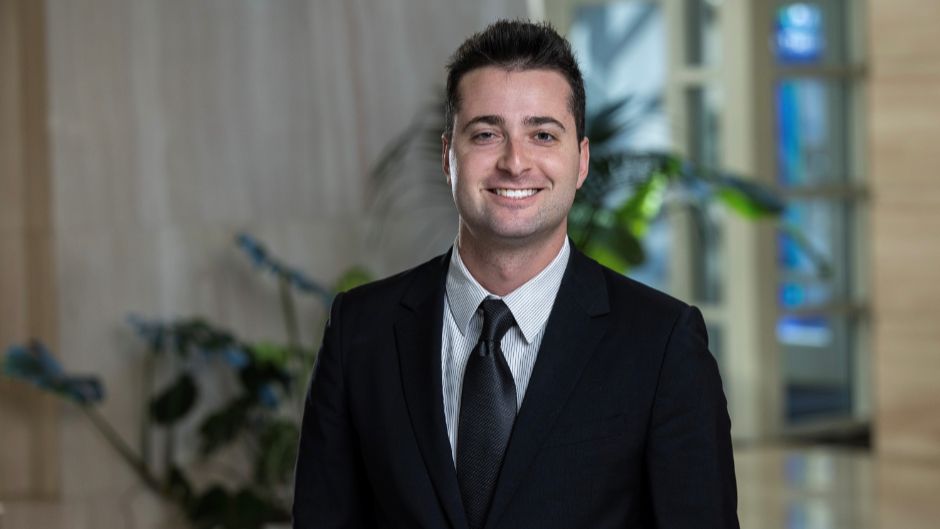
University of Miami School of Law alumnus Jake Farbman, J.D. ’25, entered law school with a passion for entertainment law and intellectual property. He has drawn on this training to author and publish an article that brings these two fields together in a prestigious law journal.
He recently published “You Wanted the Best? You Got the Best! If You Can Pay for It... Antitrust Considerations and Artist-Based Solutions for Lower Concert Ticket Prices,” in the Journal of Intellectual Property Law at the University of Georgia School of Law. Farbman's article offers a timely and thorough examination of the mounting crisis of concert ticket affordability, proposing innovative antitrust, legislative, and artist-led solutions to make live music accessible again for everyday fans.
Faculty accessibility and support
Farbman wrote the article during his time at the School of Law and received support from Jessi Tamayo, director of the Externship Program, who initially helped him with the topic and then supervised the paper, which he used for one of his writing requirements.
“As a music lover herself (with great taste), professor Tamayo was all-in on this from the jump,” Farbman said. “She encouraged me to pursue this idea not only as a legal analysis, but as a contribution to the broader conversation about fairness and access in the music industry. It was really great to be able to bounce ideas off each other.”
He emphasized the role of the school’s supportive environment. “Miami Law's strong emphasis on faculty accessibility and individualized guidance was invaluable in helping me turn a creative, music-driven idea into a thoroughly researched piece of legal scholarship.”
The broken system: A fan's perspective
For Farbman, this issue is not just academic; it is deeply personal. Before law school, he was a touring musician, giving him a unique view of the ticketing system.
“As both a lifelong music fan and a music professional, I’ve always been passionate about the issue of ticket accessibility. But it’s become dramatically worse in recent years, especially following the well-publicized Taylor Swift and Bruce Springsteen ticket fiascos,” said Farbman, who received his undergraduate degree from Arizona State University.
His personal frustration grew while writing the article when he attempted to buy tickets for the Oasis reunion tour.
“Like millions of fans, I signed up for the verified presale for their two shows at MetLife Stadium in New Jersey. I couldn’t even make it out of the queue for night one,” he said. “Fortunately, Ticketmaster redirected me to night two, where I eventually secured tickets, but only after hours of waiting and paying more than I ever had for a concert. While I was thrilled to get tickets, the experience was incredibly frustrating. It reinforced just how broken the system is for everyday fans—those who can’t even get through the queue, are priced out entirely, or are forced to turn to the secondary market despite artists like Oasis taking real steps to curb resales.”
This firsthand experience solidified the direction of his extensive research. “As a touring musician before law school, I had seen the ticketing market from both sides—as an artist trying to fill venues and as a fan trying to attend shows. That experience, combined with the growing national outrage surrounding service fees and the resale market, inspired me to dedicate two years of research to exploring how antitrust principles could be used to make live music more accessible and equitable for fans and artists alike.”
Farbman’s research dove into the complex web of factors driving up the cost of attending concerts, primarily focusing on the significant market power held by the Live Nation–Ticketmaster monopoly, the proliferation of ticket-buying bots, and the controversial practice of dynamic pricing.
Bridging creative and legal worlds
Farbman’s time at the School of Law provided him with the foundation to merge his passion for music with his legal career.
“Miami Law gave me the opportunity to merge my creative and legal worlds,” he said. His favorite experiences included participating in the Litigation Skills program, where he won the final trial and received the Director's Book Award for Excellence in Litigation Skills, and attending the annual Global Entertainment Arts & Sports Law + Industry Conference.
“The academic support and mentorship I received from Miami Law’s faculty were instrumental in my development as an entertainment lawyer,” said Farbman.
Farbman has accepted a position as an associate at Hall Booth Smith, P.C. in Nashville, Tennessee, where he will be a member of the Entertainment Practice Group, focusing on intellectual property transactions and general litigation.
“My long-term goal is to build a practice that bridges my background as a songwriter and touring musician with my legal training—representing artists, songwriters, and music businesses in both transactional and litigation matters,” he said. “Ultimately, I want to help creative professionals protect their rights, negotiate fair deals, and thrive in an industry that's rapidly evolving.”
Read more about Miami Law’s Entertainment, Arts, and Sports Law area of study.