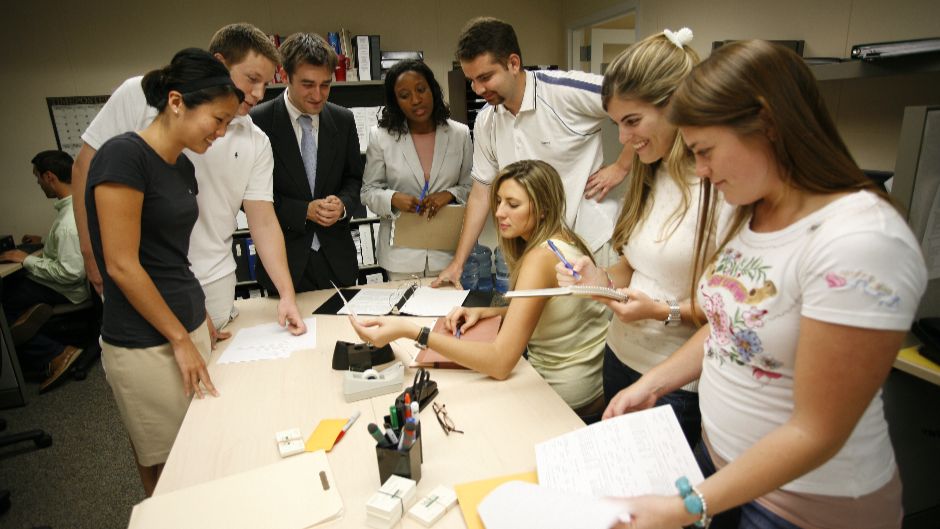
Experiential education is central to Miami Law's mission to prepare students for modern legal practice. In Miami Law's clinical programs, ranked #24 in the nation by U.S. News and World Report in 2025, students don't just study law—they practice it.
Through the corridors of Miami Law, there are nearly 200 students each year immersed in real-world legal work across nine distinct clinics: Bankruptcy, Children and Youth Law, Immigration, Health Rights, Human Rights, Startup, Innocence, Environmental Justice, and Investor Rights. Each clinic represents a different pathway into the profession and a different way for students to make a difference.
"Our innovative clinical program stands among the best in the nation and is taught by accomplished faculty with deep expertise in both practice and clinical teaching," said Bernard Perlmutter, director of clinics and co-director of the Children and Youth Law Clinic.
The clinics make an impact. In the 2024–25 academic year alone, nineteen faculty members led 193 students in providing 40,222.63 hours of free legal services to the community.
Nine Clinics Offer a Range of Possibilities
The diversity of clinical opportunities means students can find their passion. Whether it's freeing the wrongfully convicted individual through Florida's only university-based Innocence Clinic or protecting vulnerable ecosystems through the Environmental Justice Clinic's cutting-edge advocacy, students gain real-world experience and make an impact.
Students also develop their litigation and transactional law skills. In the Investor Rights Clinic—one of the few such programs in the United States—students argue before FINRA arbitration panels. Immigration Clinic students represent clients in deportation proceedings. The Health Rights Clinic sends students to administrative hearings on disability claims. The Startup Clinic, certified by the U.S. Patent and Trademark Office, helps new businesses navigate trademark applications and, at times, assists with business formation for University of Miami student entrepreneurs and local nonprofits.
The Faculty Difference
Part of what makes these experiences transformative is the caliber of the clinical faculty. Miami Law's clinics are taught primarily by full-time faculty who bring decades of practice experience and deep expertise in clinical pedagogy.
"What makes our program exceptional is not just the variety of our clinical opportunities, but that our clinics are led primarily by full-time faculty,” Perlmutter said. “Students train in modern, fully equipped clinic suites, developing their skills in close collaboration with our dedicated faculty.”
For example, Associate Director Robert Latham of the Children and Youth Law Clinic has a unique skillset in data policy research, which allows students to advocate for systemic change backed by rigorous analysis. Professors in the Human Rights Clinic guide students through world-class policy advocacy on national and international stages, turning the classroom into a launching pad for global impact.
Clinical faculty members not only supervise, but also mentor. Class sizes are deliberately kept small, allowing for personalized attention as students develop strategy, interview clients, negotiate with opposing counsel, draft pleadings and contracts, and conduct trials. Under close faculty supervision, students function as the lead lawyer, responsible for all aspects of their cases, transactions, or policy projects.
An Interdisciplinary Edge
Another distinctive feature of Miami Law's clinical program is its interdisciplinary richness. Being situated at a major research university extends what is possible. For example, the Health Rights Clinic collaborates with the Miller School of Medicine, bringing together legal and medical expertise to serve clients holistically. The Environmental Justice Clinic partners with the Rosenstiel School of Marine, Atmospheric and Earth Science and the Abess Center for Ecosystem Science and Policy, allowing students to combine legal advocacy with cutting-edge environmental science. The Children & Youth Law Clinic partners with the School of Education and Human Development on First Star University of Miami Academy.
"This is a particularly rich place for advocacy and the interdisciplinarity of what we do," said Perlmutter. "Being situated at a major research university gives students the ability to collaborate in ways that simply aren't available elsewhere."
This interdisciplinary approach doesn't just enhance education—it magnifies impact. When law students work alongside marine scientists, medical professionals, or business researchers, they can advocate more effectively and craft more creative solutions.
Skills That Transfer, Experiences That Transform
Alumni often say their clinic experience was the most valuable experience of law school, with "one foot in the classroom and one foot in the courtroom.” The skills gained—client counseling, negotiation, legal writing, oral advocacy—are transferable to any legal setting.
This is why Miami Law's clinical program stands among the finest in the nation.
For almost 200 students each year, the clinics at Miami Law offer students the opportunity to not only learn theory, but also practice with skill, integrity, and purpose. In nine clinics, across countless cases and projects, they're taking what they have learned and making an impact.
Read more about Miami Law’s clinics.
