The University of Miami School of Law's Center for Ethics and Public Service is marking its 30th anniversary, celebrating three decades of groundbreaking work in legal ethics, experiential training, and impactful community engagement. Since its founding in 1996, CEPS has been a beacon for cultivating "citizen lawyers," instilling in School of Law students an enduring commitment to ethical practice and public service in both their professional and civic lives.
The center's success stem from a visionary mission articulated by its founder and director, professor Anthony V. Alfieri, the Michael R. Klein Distinguished Scholar Chair. "The founding vision of the center was animated by three driving forces: first, the internal, curricular need to design and build in-house, live-client clinics to better prepare Miami Law students for both for-profit and nonprofit practice; second, the external need to expand the law school’s faculty and student collaboration with The Florida Bar and bench in the fields of ethics and professionalism, and third, the institutional need to better serve underrepresented communities in Miami-Dade County."
This vision has been meticulously realized over the years. The core mission of the center, according to Alfieri, remains clear: "The mission of the center is to educate and train Miami Law students to serve in leadership roles in both their professional and civic communities."
Cultivating citizen lawyers
The center’s educational pipeline is designed to cultivate a culture of leadership from day one. Through its 1L internships, 2L and 3L fellowships, and undergraduate internship programs, students engage in community-based rights education, interdisciplinary research, and law reform advocacy.
Internally, the center has been a vital incubator for experiential learning. Alfieri highlights the profound influence of these programs:
"Internally, our initial design-build of the Environmental Justice Clinic and the Health Rights Clinic, and our interim stewardship of the Children & Youth Law Clinic, have proven to be enormously impactful for students and for faculty recruitment and scholarship in the field of clinical education."
The hands-on work extends far beyond the campus. Under the leadership of Emily Balter, the Fredman Family Foundation Practitioner-in-Residence, the Community Equity Lab is a prime example of the Center's commitment to "law-in-action."
"The Community Equity Lab not only exposes students to the constitutional, statutory, and common law dimensions of law-in-action but immerses students in the real-time, street-level context of neighborhoods where they interact daily and directly with civic leaders, clergy and congregations, and government officials, and in doing so, learn the importance of legal and ethical judgment to effective lawyering," said Alfieri.
Community impact
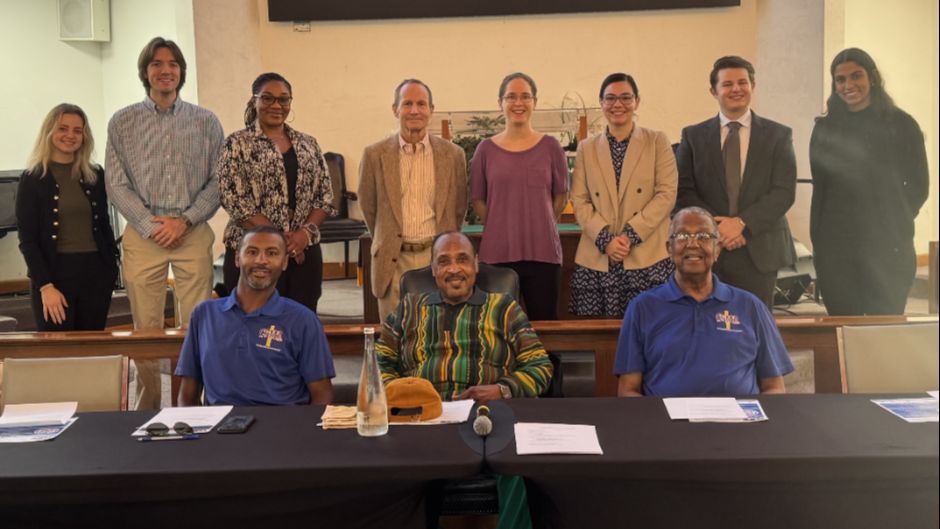
The external impact of CEPS is perhaps most visible through its enduring community partnerships. Working with organizations like GRACE, Inc. (Grove Rights and Community Equity), the Ministerial Alliance of Black Churches in Coconut Grove Village West, and homeowners’ and tenants’ associations, CEPS has driven significant civil rights law reform campaigns.
Alfieri said that externally, the community partnerships committed to advance civil rights law reform campaigns in the areas of economic development, environmental justice, fair housing, transportation, and voting have been significant for underserved neighborhoods throughout the City of Miami and Miami-Dade County.
A compelling new initiative is the recently established Freedom School in cooperation with Macedonia Missionary Baptist Church in Coconut Grove Village West. Led by Dr. Kesha Merritt, the center’s senior program manager, and Anaïse Boucher-Browning, program coordinator, the program is already making a difference: "The Freedom School has provided scores of low-income, K-12 students educational opportunities in a supportive, community-centered learning environment," Alfieri said.
Looking ahead, the center is poised for further growth and innovation. Alfieri shared the promising initiatives on the horizon: "The center is working to enlarge our teaching of transactional skills in the areas of housing and economic development, broaden our interdisciplinary collaboration with students and faculty across the University of Miami, and expand our public health alliance with the Miller School of Medicine."
As the Center for Ethics and Public Service enters its fourth decade, its commitment to ethical judgment, public service, and community justice continues to define its legacy, ensuring that the University of Miami School of Law remains at the forefront of preparing the next generation of leadership-ready citizen lawyers.
Read more about Miami Law’s Center for Ethics and Public Service.
Read about Miami Law’s Social Justice and Public Interest area of study.