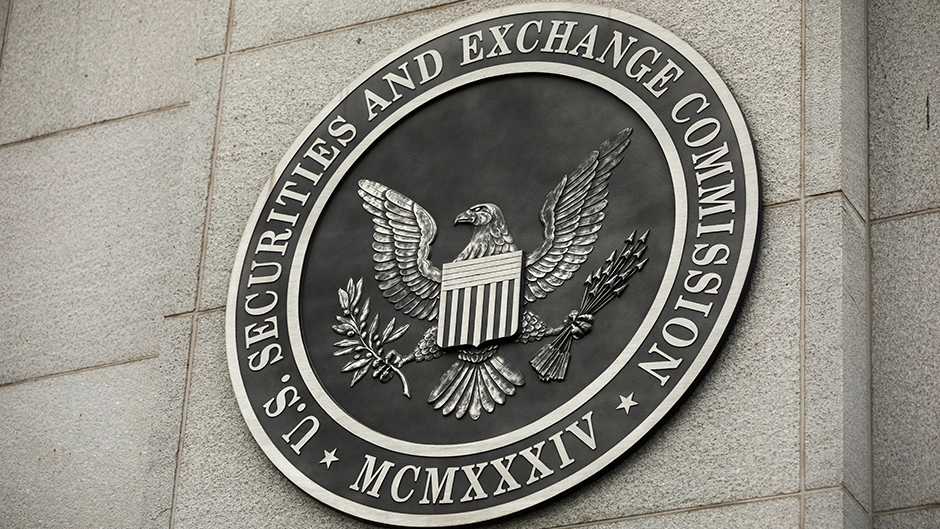
The U.S. Securities and Exchange Commission’s Investor Advisory Committee turned its attention recently to the changing landscape of global capital markets—and University of Miami School of Law Professor George S. Georgiev was at the center of the discussion. As a member of the Committee, Georgiev organized and moderated a two-part panel examining the SEC’s ongoing reconsideration of the definition and regulatory treatment of so-called “foreign private issuers” (FPIs)—non-U.S. companies that are listed on U.S. stock exchanges and raise capital from U.S. investors.
The discussion took place during the Committee’s quarterly meeting in Washington, D.C. on September 18, 2025, and followed the SEC’s June 2025 Concept Release on Foreign Private Issuer Eligibility. The SEC sought public comment on whether companies that rely on this special status still warrant the substantial regulatory exemptions and accommodations they have traditionally received. The FPI category applies to hundreds of foreign companies listed on U.S. exchanges and determines the scope of their reporting, disclosure, and governance obligations. In recent years, the category has come to include firms that are incorporated abroad but trade almost exclusively in the United States, raising new questions about regulatory arbitrage and investor protection.
Georgiev’s panel included experienced attorneys, investor representatives, non-U.S. regulators, and leading academics, who engaged in an extended conversation about how the SEC should modernize its approach. Participants explored whether existing eligibility tests, which take into account factors such as whether a majority of shareholders, officers, and directors are U.S. residents and whether the firm’s business is principally administered from the United States, remain appropriate in an era of increasingly globalized ownership and virtual corporate headquarters. The panelists also debated possible reforms, such as introducing a foreign trading volume test or clarifying which jurisdictions meet robust regulatory standards.
SEC Chairman Paul Atkins opened the Investor Advisory Committee’s meeting by noting its “important mission to give considered input to the Commission,” and highlighting the need to “consider whether the SEC’s original rationale and current standard for extending special accommodations to foreign companies still make sense” in light of “the notable changes [in] the makeup of foreign companies reporting to the SEC and the trend of incorporating in a jurisdiction, such as the Cayman Islands, that differs from where the company is headquartered, operates, and is subject to a governance framework that implicates shareholder interests.”
Beyond the FPI panel, Georgiev was actively involved in drafting the Committee’s recent recommendation on retail access to private market assets, which underscored the need for data transparency, investor education, and regulatory oversight to ensure that expanded access does not undermine investor protection—a topic closely linked to his academic work on disclosure and capital formation.
Established by Congress under the Dodd-Frank Act, the Investor Advisory Committee is charged with advising the SEC on regulatory priorities and market integrity initiatives, and its recommendations often help shape future rulemaking and policy direction. The Committee’s members are appointed by the Commission to four-year terms and include investors, academics, and representatives from across the financial ecosystem.