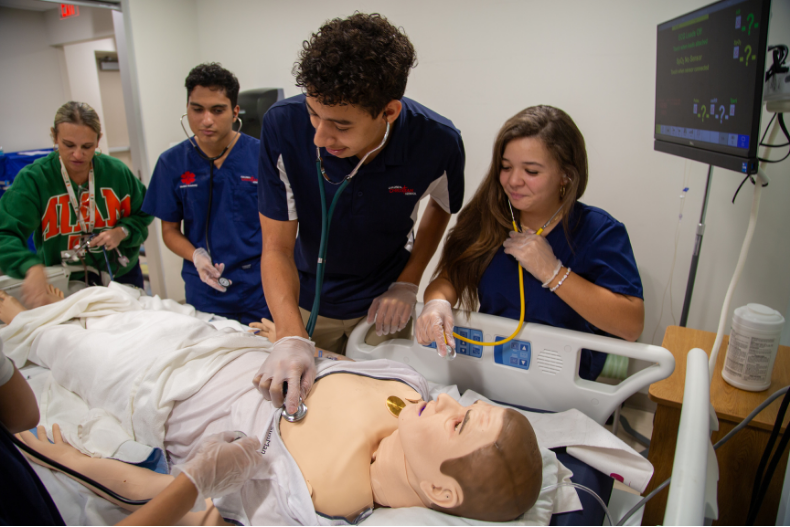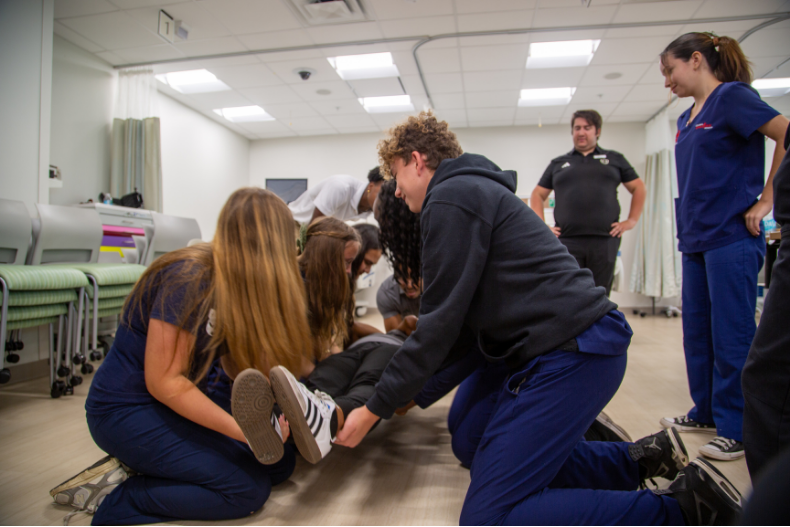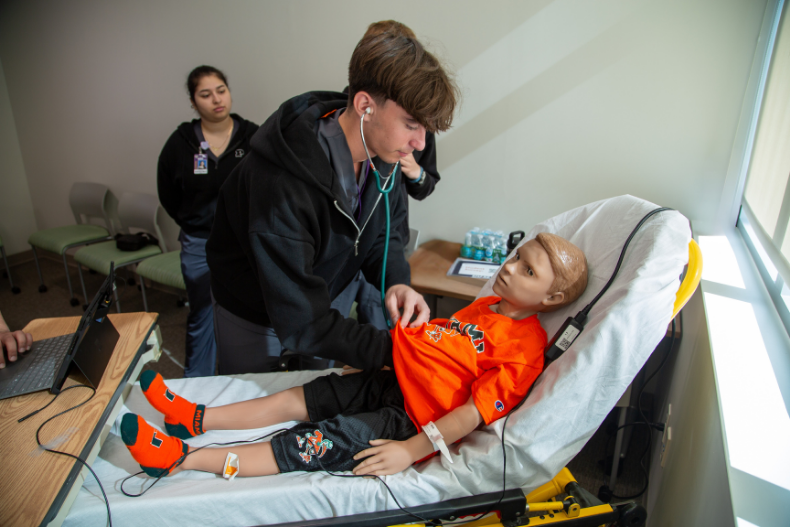
Participants jumped into action when SimMan’s health suddenly deteriorated. The high schoolers had been practicing vital signs on SimMan and other specialized training manikins at S.H.A.R.E. Simulation Hospital Advancing Nursing & Education® (S.H.A.R.E.) when simulation technologists activated signs of a seizure from behind the scenes. Guided by trained instructors, the South Florida teens soon learned how to safely place SimMan on oxygen and roll him onto his side to prevent further injury during the crisis. This event taught the students lifesaving techniques and helped strengthen their awareness of how important team-based communication and critical‑thinking are in health care settings.
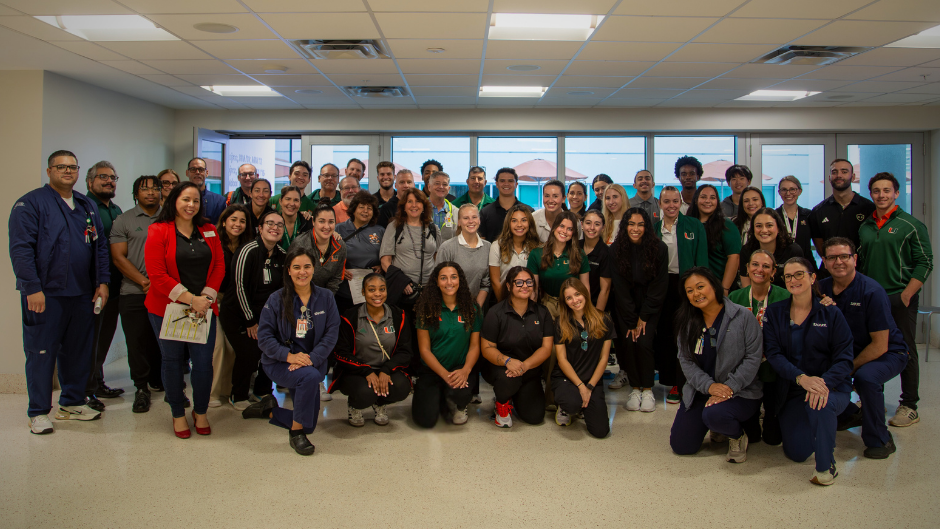
This adrenaline-fueled hands-on scenario with SimMan was just one of the many exciting activities that 176 students from seven area high schools took part in recently during “A Day in the Life of University of Miami Health Care Students.” Staff from S.H.A.R.E. and the School of Nursing and Health Studies have hosted the popular annual event for the past three years. This year organizers expanded the event’s horizons further, for the first time partnering with the School of Education and Human Development’s Department of Kinesiology and Sport Sciences and the Miller School of Medicine’s Department of Physical Therapy.
A Day in the Life is designed to prepare teens, especially those interested in health professions, for success in their college and career pathways. “What began as an idea has grown into a multidisciplinary experience that truly brings health care education to life,” said Zuzer Calero, executive director, S.H.A.R.E. Business Operations. “Our goal for this event has been to spark curiosity, build confidence, and open doors.”
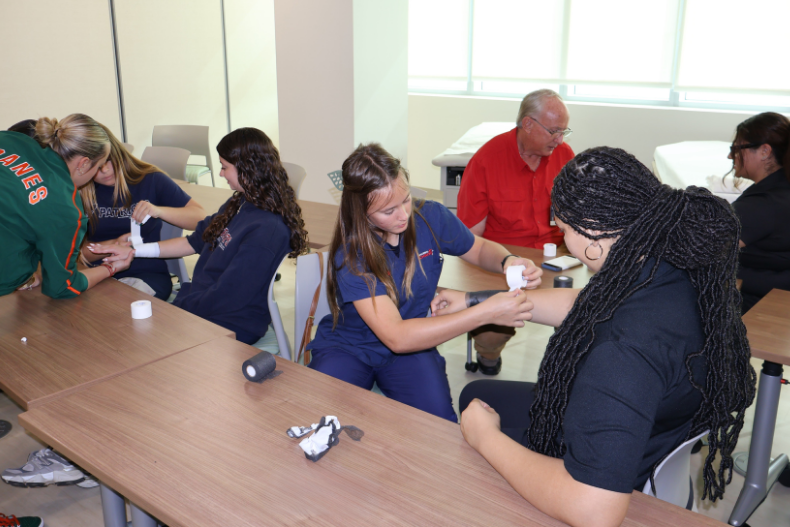
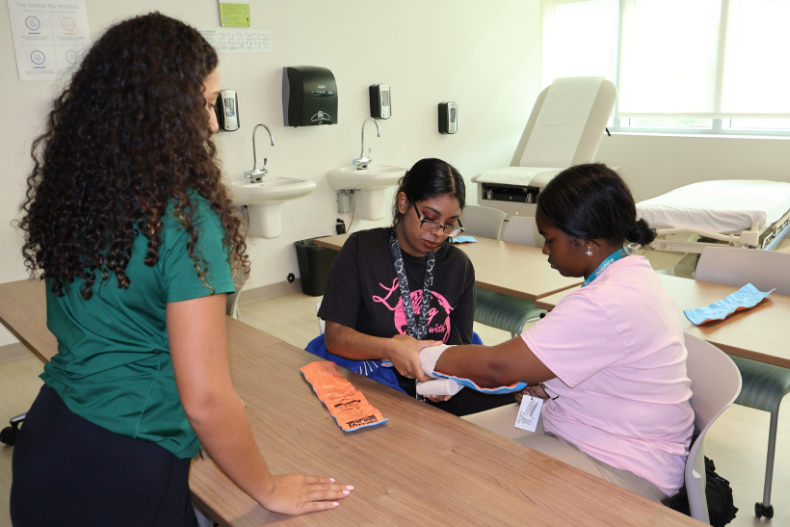
Those doors opened quite literally on December 11, 2025, welcoming students from Ronald Reagan Doral, Southwest Miami, Cypress Bay, Miramar, Immaculata-La Salle, Dibia DREAM, and Colonial Christian high schools to the Coral Gables campus. From S.H.A.R.E.’s first floor to its fifth, participants rotated through interactive stations. Taylor Wilmoth, a lecturer and clinical coordinator for the Athletic Training Program at the School of Education and Human Development, was impressed by how quickly the students caught on to lessons about taping and wrapping minor injury, splinting for more advanced recovery support, and basic cervical spine aid. “Watching them develop from not being able to tear tape to securing a wrist in 17 minutes’ time showed just how invested they were,” said Wilmoth, who was new to the event. “Their excitement was reflected in the skills they gained throughout the day.”
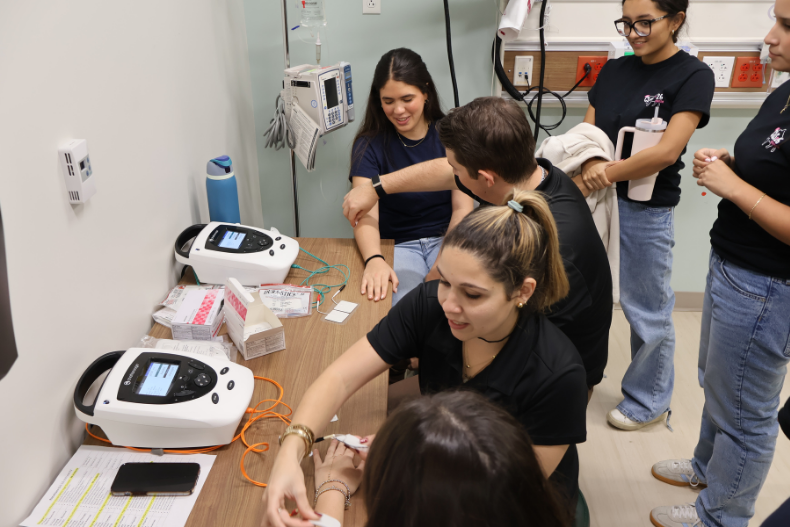
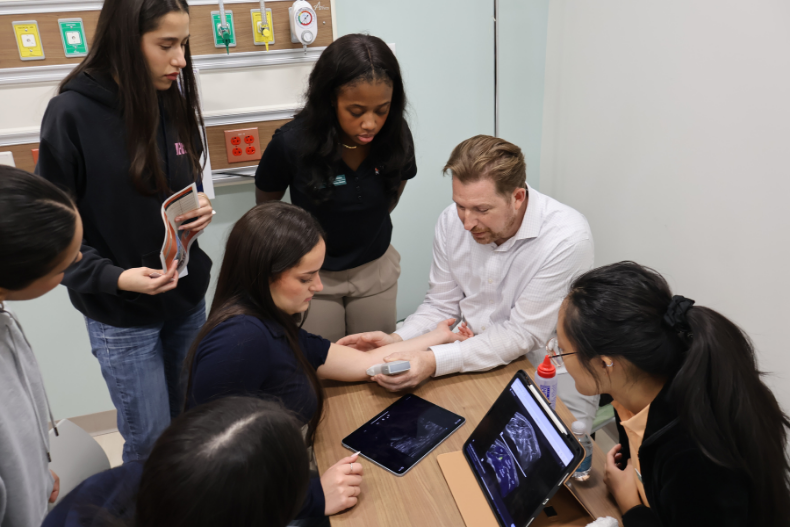
Miller School physical therapy instructors connected classroom science with real-world patient care, too, demonstrating ultrasound imaging of muscles, neuromuscular electric stimulation, and other biophysical agents they commonly used in rehab. Miramar High School students Amaiyah Smith and Shantoria Toliver were fascinated to see their hands twitch involuntarily when neuromuscular electrical stimulation wires were applied.
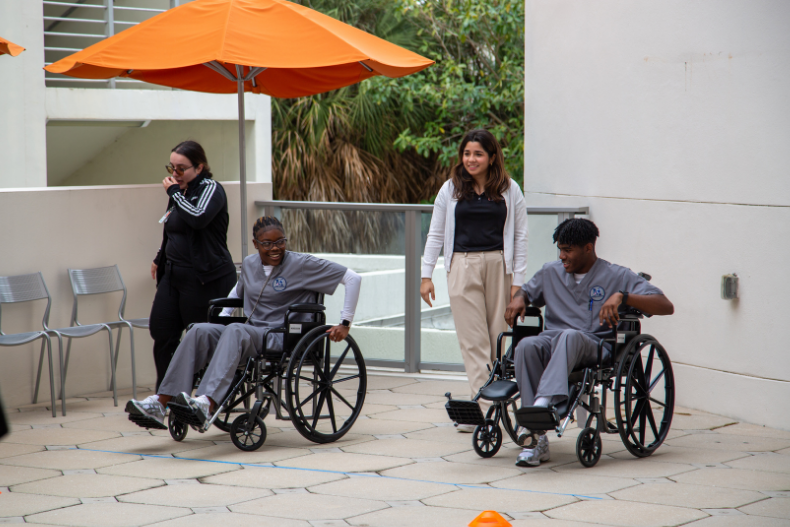
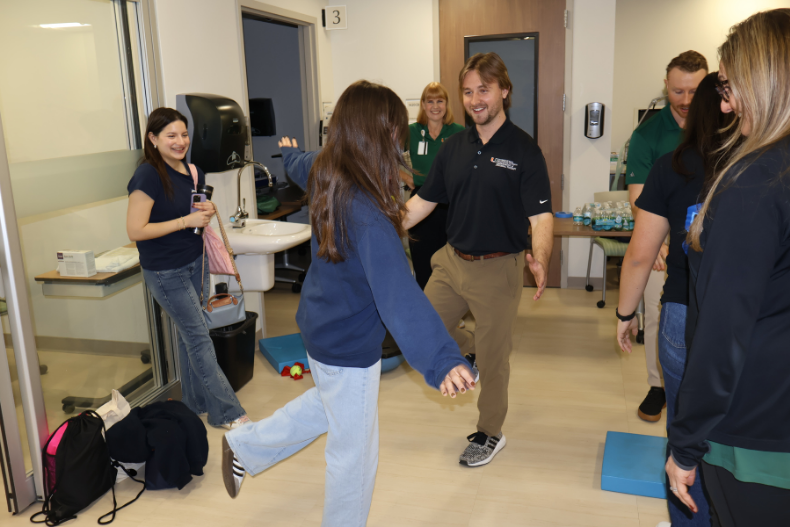
The PT instructors also set up an assistive-device obstacle course on S.H.A.R.E.’s outdoor patio, guiding their students through balance and heart rate drills, vestibular and balance assessments, and cardiopulmonary physical therapy exercises to help them empathize with the population they treat. “They were able to experience how difficult it can be to navigate an urban area in a wheelchair,” said board-certified sports clinical specialist Dr. Michele Raya, an associate professor of clinical.
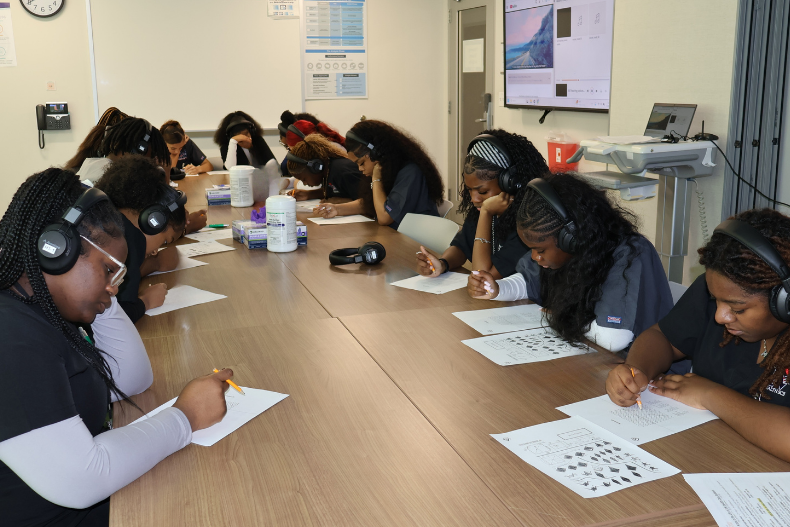
Empathy was a key theme of the “Hearing Voices” exercise led by Dr. Frank Guido-Sanz, associate dean for simulation education and research at the School of Nursing and Health Studies. In it, participants were asked to complete cognitive tasks while wearing noise-cancelling headphones to simulate the lived experiences of a patient with schizophrenia. Participants received a summary of health conditions which present auditory hallucinations, how they may affect cognition, and other pertinent information. After the exercise, Dr. Guido-Sanz led a debriefing using the PEARLS framework, exploring students’ reactions, feelings, experiences, and analyses of the simulation. The debriefing framework used with all simulation activities at S.H.A.R.E. gave the students a clear understanding of the analytical, reflective approach they will be expected to use in college.
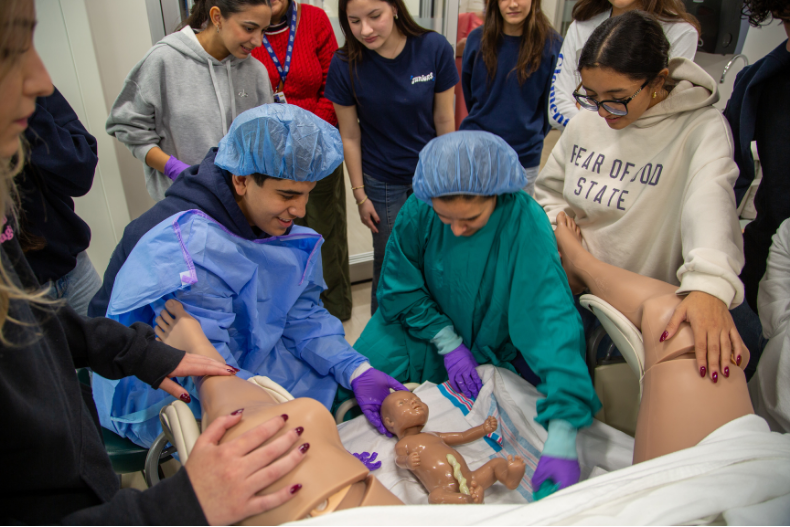
One of the day’s most popular activities was Giving Birth with Victoria, where instructors taught students on a high-fidelity manikin in simulated labor how to assess an expectant mother’s vital signs and use a tocodynamometer (TOCO) device to measure frequency, duration, and intensity of uterine contractions. Instructors reinforced the importance of compassionate care by having students practice therapeutic communication with Victoria during the delivery. The students also got the chance to take vitals and assess lung, heart, and bowel sounds on two other high-tech manikins—Super TORY, a newborn, and Pediatric HAL. Seniors Gabriel Ruiz and Alexis Arias, both from Southwest Miami High, said the experience encouraged them to think more about pediatrics as a possible specialty.
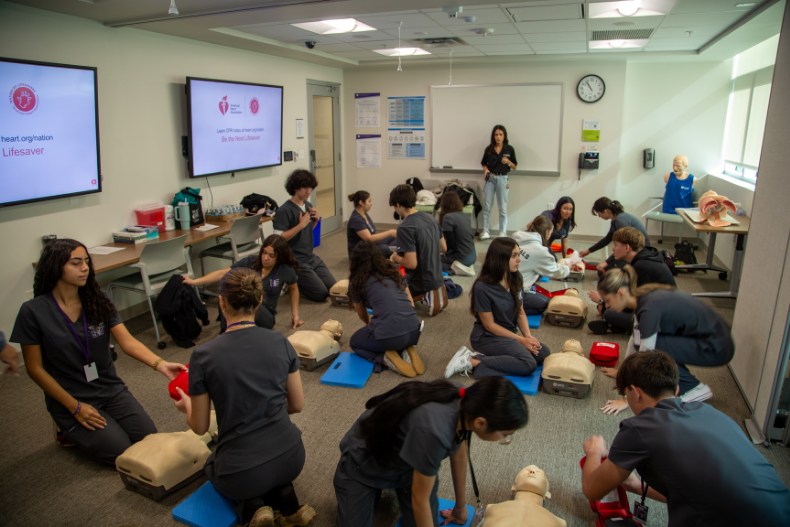
A Day in the Life concluded with students practicing basic life support skills, including cardiopulmonary resuscitation (CPR) and automated external defibrillators (AED) S.H.A.R.E. educator Jacqueline Braun Lopez said the students demonstrated maturity about the subject matter and asked good, thoughtful questions about the material covered. It’s not surprising. As one of S.H.A.R.E.’s foremost community engagement efforts, A Day in the Life gives this next generation of health care professionals a strong grounding in their interests and an authentic glimpse of the many possibilities that await them. Adding new health care disciplines in 2025 showed S.H.A.R.E.’s commitment to innovating interdisciplinary education.
“By giving high school students meaningful, hands‑on experiences with specialists in diverse areas of health care,” concluded Calero, “we help them envision a future in health care and equip them with skills that will follow them far beyond today.”