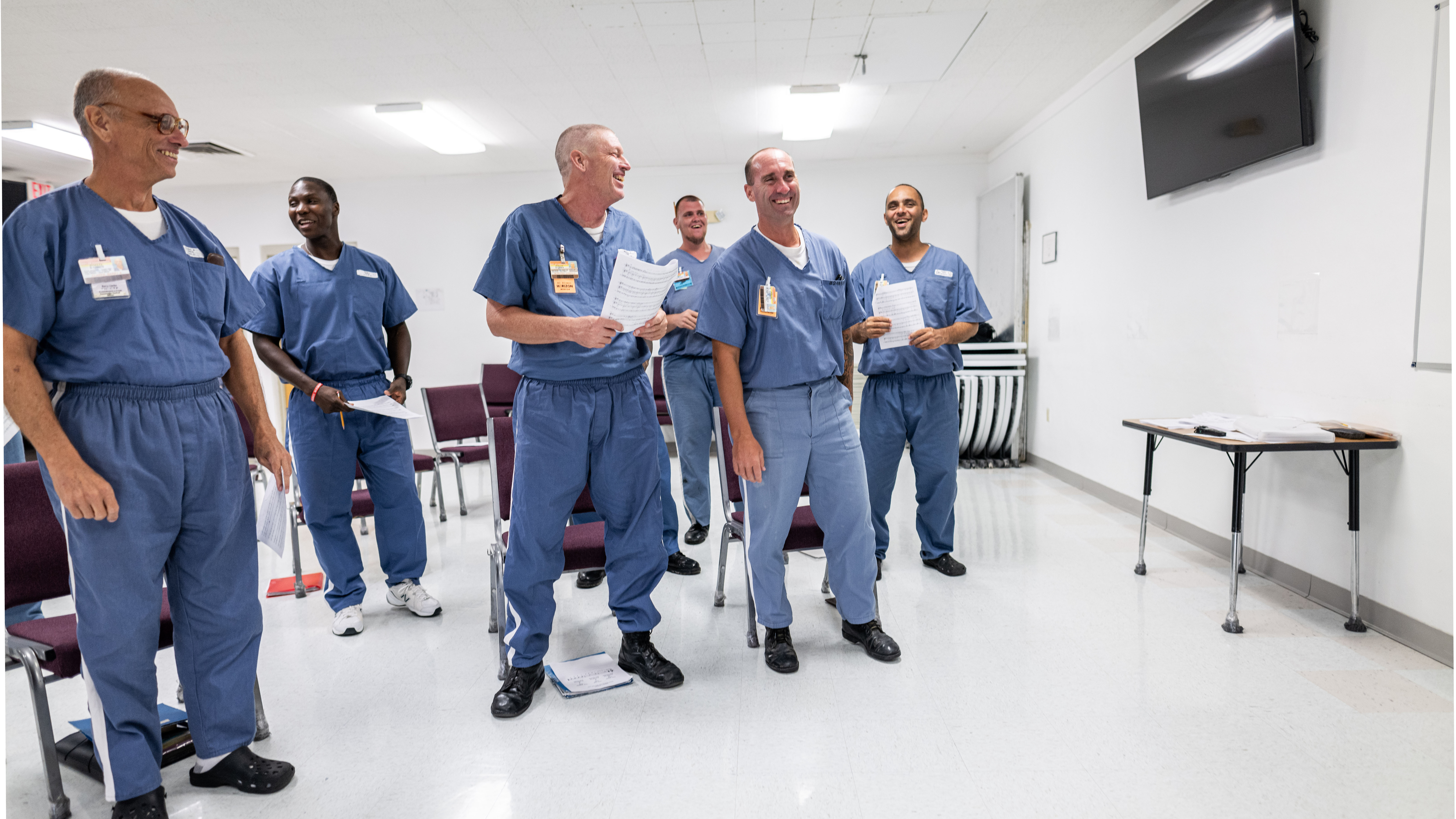
At the Everglades Correctional Institution, a group of men gather each week for the Bluebirds, a men’s choir where their voices rise together in harmony.
One of the people helping to support the choir is Adriana Novello, a senior double majoring in psychology at the University of Miami College of Arts and Sciences and music therapy at the Frost School of Music.
“Music reaches people in ways words often can’t,” said Novello, who is completing an internship through Miami Sound Space, a nonprofit whose programs include the Bluebirds. “When we started the choir, I knew it had the potential to change lives, but I didn’t realize just how deeply it would impact everyone involved."
Every other week, Novello travels to Everglades Correctional Institution to help facilitate the choir. Her work includes songwriting collaboration, special event planning, repertoire selection, writing and submitting state proposal applications, and singing as an active Bluebirds member.
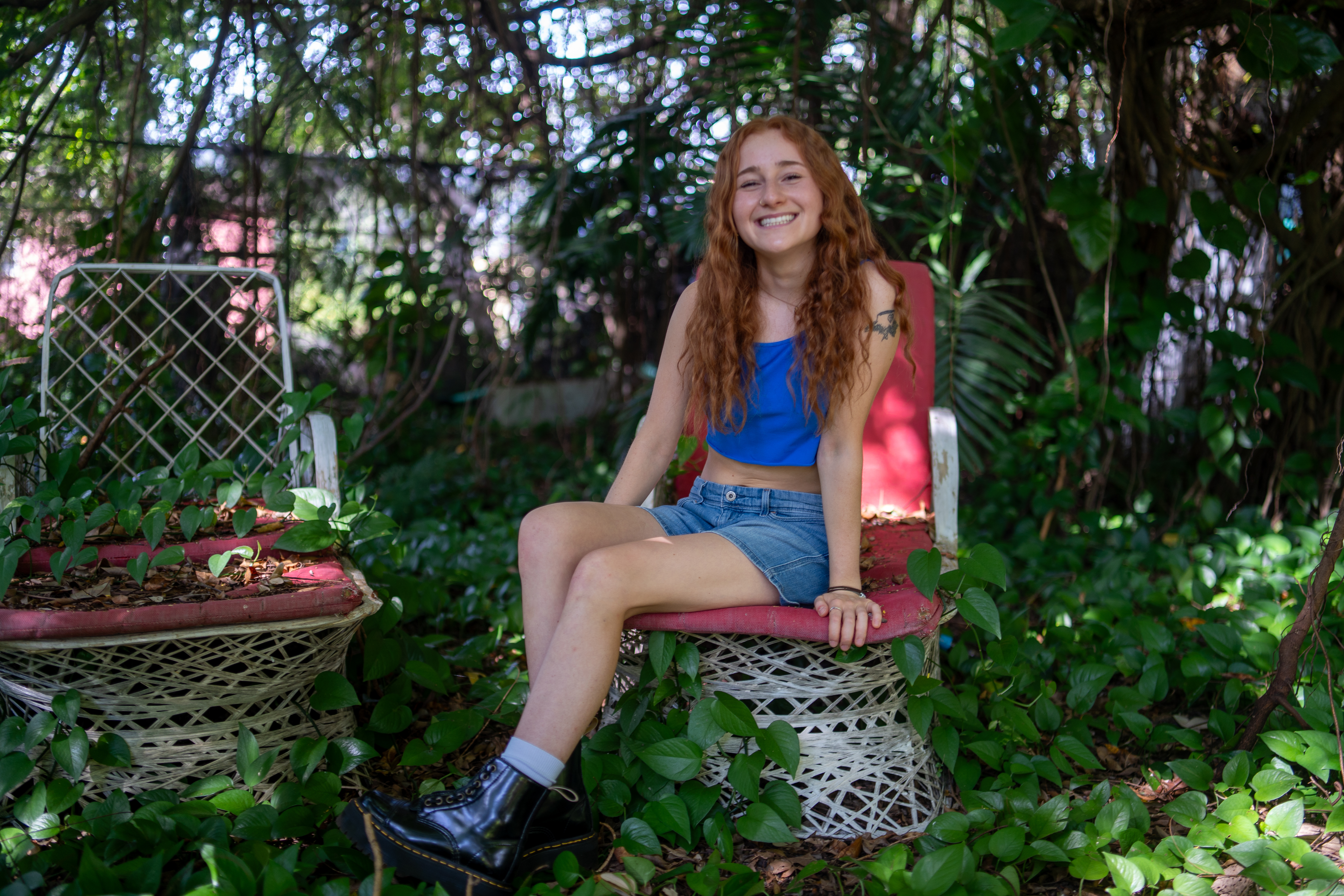
Novello works under the guidance of Laurah Merisier, the founder and director of Miami Sound Space and an adjunct professor of contemporary voice at the Frost School of Music, who is also a University of Miami alumna. Miami Sound Space promotes music-making across Miami through accessible, community-based choir programs like the Bluebirds.
The Bluebirds is an all-men’s choir that aims to unite the diverse voices of people from all walks of life. It brings participants comfort, happiness, and a sense of healing by enabling them to do something they love with people going through the same experiences.
“A lot of prison programs focus on rehabilitation through therapy and counseling, which are incredibly important,” Novello said. “But sometimes, people just need a space where they can feel human, where they don’t have to relive their trauma but can instead create beautiful music.”
Despite some administrative challenges, the choir has continued to grow, with over 60 members and counting. Many have been involved for several years, deepening their musical skills and relationships.
The choir's impact goes beyond singing. In an environment where incarcerated individuals are often judged solely for their crimes, this program meets them where they are, offering music as a means of connection and expression.
For those outside prison walls, it can be challenging to understand what the experience of working with the choir is like. “People always ask me, ‘Was it scary the first time you went into the prison?’ And I always say, ‘I wish I could put you in my pocket and bring you in with me,’” said Novello, who is also minoring in sociology at the College of Arts and Sciences. “If you could just see the love in that room, hear the laughter echoing, and the beautiful music we create, it’s nothing like what people imagine.” After three years, the choir received approval to bring in a camera, allowing Miami Sound Space to capture the performances and share the transformative power of music with a wider audience.

One of the biggest challenges the choir faces is difficulty connecting with the outside world. Efforts to organize collaborative events with the other choirs supported by Miami Sound Space have been blocked by Florida Department of Corrections regulations. Still, the team finds creative ways to bridge the gap, such as bringing in written reflections from people on the outside on the choir’s original songs for the Bluebirds to read.
For some participants, the choir is more than just a musical outlet. “One of our members once said, ‘Some people in here have family that visits every other week. You guys are that for me,’” Novello recalled. “For some, we’re their only link to the outside world. And that means so much to be a part of.”
Novello added that the connections she has formed in the rehearsal room have changed her life. “I intend to devote the rest of my life to helping underserved individuals because of how impacted I’ve been by the guys here,” she said. “They have taught me so much and inspire me every time I visit.”
Novello graduates in May and will complete a music therapy internship in California at a forensic mental health hospital. Her dream is to complete her Ph.D. in clinical psychology with a focus on underserved populations. In the past, she has researched incarcerated populations and intends to expand on this work, continuing to do what she can on the outside for the people she’s had the privilege of knowing on the inside.
In the meantime, the Bluebirds continue to grow, providing a space for creativity, connection, and personal growth within the prison system. Through resilience and creativity, they prove that even behind bars, voices can rise, and harmony can be found.
