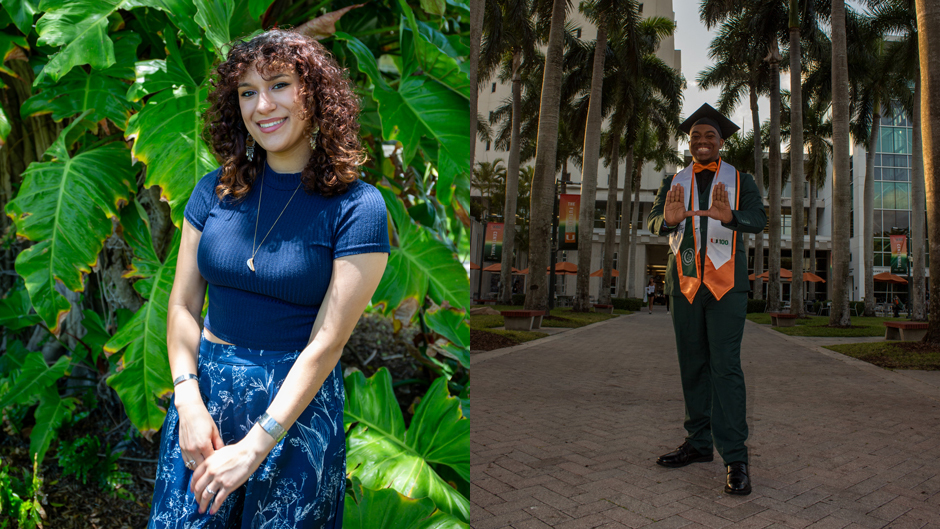
While studying at the University of Miami College of Arts and Sciences, Michael Robinson, Jr. and Isabella Arosemena worked to make the world a better place.
Michael Robinson, Jr.
Michael Robinson, Jr. has been interested in neuroscience ever since his mother—who has thankfully since recovered—was diagnosed with a brain tumor when he was a child.
Originally from Pittsburgh, Pennsylvania, Robinson decided to come to the University of Miami in part because of the research opportunities in the neuroscience program. He majored in neuroscience and minored in chemistry and LGBTQ studies.
“Looking back, I'm very glad that I came to UM because of all the opportunities that it gave me,” Robinson said.
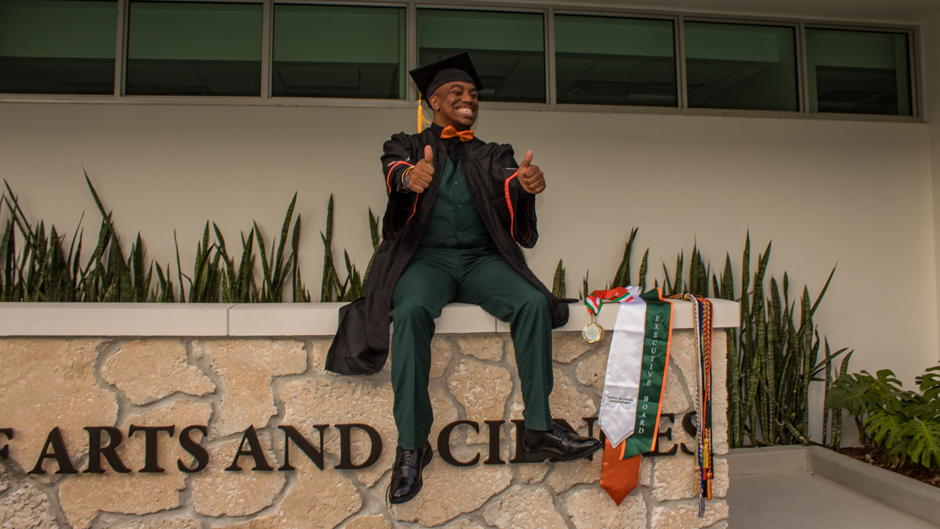
One of those opportunities was conducting research in the laboratory of Sannisha Dale, an associate professor in the Department of Psychology, on the effects of microaggressions on Black women living with HIV. This fall, Robinson will start a McKnight Doctoral Fellowship and a neuroscience Ph.D. program at Florida Atlantic University, where he plans to continue studying the health impacts of discrimination.
Research and academics aren't the only areas in which Robinson excelled at the University. He also helped build community for LGBTQ+ students and Black students, serving in leadership roles in Student Government, United Black Students, Black Leaders for the Queer Community, and 100 Strong, and planning programming for the Multicultural Student Affairs Office. He also worked in the University's LGBTQ Student Center Office.
Robinson's many activities—and the skills he gained from them—are soon to be highlighted in badges on his LinkedIn profile, thanks to a new Office of the Provost program called Cane Commitment that launched in the fall. Robinson was the first recipient of the graduation medal for Cane Commitment, which helps students showcase the skills and competencies they develop through academic, co-curricular, and extracurricular activities.
“I think it's a great program,” Robinson said. “You can say you did all these things, but to have tangible evidence is really great for employers.”
Robinson's advice for younger students is to remain focused on their goals in earning a college degree, especially when they encounter obstacles.
“At times at college and in life, there are definitely going to be points where you face rejection, but never give up,” he said. “Always remember why you're here. You got here for a reason.”
Isabella Arosemena
As a child in Florida, Isabella Arosemena often explored the outdoors with her family, and she fell in love with the the state’s natural beauty.
“Growing up in South Florida—a place that is so rich in natural and cultural history—has instilled in me a reverence that has grown into a passion to protect it,” Arosemena said.
At the University of Miami, Arosemena majored in ecosystem science and policy and minored in anthropology, biology, and motion pictures. She also worked to protect the environment outside of class, serving as president of Plant-Based Canes, a group that educates students about the benefits of a plant-based diet, and getting involved with the Tropical Audubon Society. Additionally, she worked as a campus organizer with the CLEO Institute’s genCLEO Youth Movement and as vice president of the organization’s campus chapter, raising awareness about climate change and encouraging classmates to participate in community advocacy.
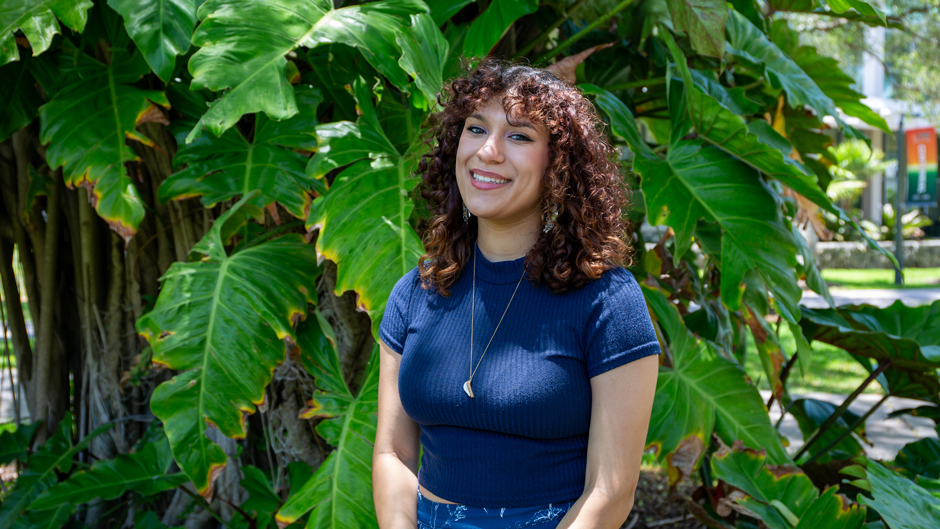
The summer before her senior year, Arosemena completed an internship with the Smithsonian Environmental Research Center in Maryland. Through this experience, she connected with the Smithsonian's Ocean Travelers collaborative science project, through which volunteers collect litter on beaches all over the world. Arosemena surveyed members of the project to study their motivations and satisfaction with the work. This research became the basis for her honors thesis, and she will present her findings at the Conference for Advancing Participatory Sciences shortly after she graduates.
Arosemena said that completing an optional honors thesis was one of her proudest accomplishments at the University.
“What makes me proud is that I can leave the school knowing I took advantage of every opportunity I could, even if I didn’t have to do it,” she said. “I wanted to do it, for those like me who maybe don't get the same chance. It’s a lot of work, but I like uncovering the answers.”
After she presents her research at the conference, Arosemena is planning to move to Panama, where she has family. Her long-term goal is to apply for joint Ph.D./J.D. programs with a focus on environmental law.
As she looks back on her experience at the University, Arosemena said she is thankful for the faculty members whose classes she took.
“I'm grateful for all the professors I had,” she said. “They all helped me grow to be the student and person I am now.”
View photos and videos from commencement ceremonies from our multimedia coverage.
Read student profiles and find commencement ceremony info in our special report.