Public and private organizations face complex security challenges ranging from natural disasters like hurricanes and wildfires to man-made crises such as hazardous material spills. Key to protecting people and property during these situations is the work of emergency management and disaster preparedness specialists.
Want to learn more about this exciting career? In this article, you’ll find step-by-step guidance for launching a career in emergency management and disaster preparedness, including information on higher education programs; tips for gaining practical experience; and a list of skills that can help you succeed in this field. Whether you’re currently in college or exploring a career change, this guide will help you get started.
What does an emergency management specialist do?
Emergency management specialists work with local, state, and federal agencies, nonprofit organizations, and private companies to help prepare for natural disasters and other acute crises. They assess risks, develop plans to mitigate harm, and coordinate the response during and after the crisis.
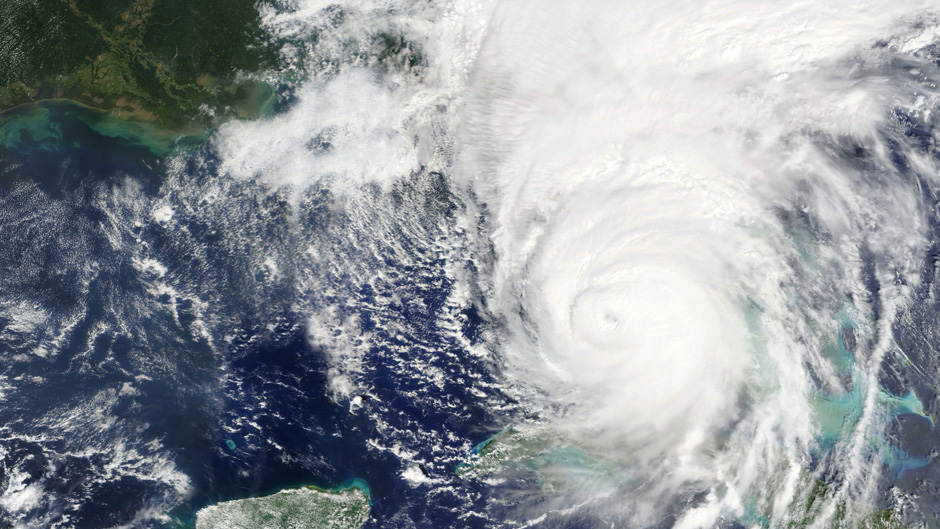
To prepare for a hurricane, for example, an emergency management director working for a local government agency develops and disseminates emergency plans and procedures, such as evacuation procedures. During the storm, they run an emergency operations center that serves as a hub for all stakeholders involved in the disaster response. After the hurricane passes, they coordinate efforts to assess damage and provide relief to residents.
Emergency management specialists help carry out this important work. Diannis Barban, an emergency management specialist for Miami-Dade County’s Department of Emergency Management, focuses on local mitigation strategies, for example. Her role involves working with local governments and other stakeholders to prioritize projects, such as road improvement projects, that lessen the harm caused by hurricanes and other emergencies. When crises occur, she coordinates the infrastructure branch of the emergency operations center to help restore utilities, clear debris, and assess damages.
Steps to become an emergency management specialist
The job requirements for emergency management specialists vary depending on the organization. Here are some general recommendations to get you started:
1. Earn a bachelor’s degree
The first step to becoming an emergency management specialist is earning a bachelor’s degree from an accredited college or university. A career in emergency management typically doesn’t require a specific undergraduate degree, but degrees in fields such as political science, international studies, computer science, geography and sustainable development, sociology, or criminology can provide a helpful academic foundation.
Some universities offer specialized programs for students interested in this field, such as the University of Miami College of Arts and Sciences’ minor in disaster relief and humanitarian aid, which is offered by the Department of Political Science.
2. Consider a master’s degree or graduate certificate
Regardless of what you majored in as an undergraduate, a master’s degree in a relevant field can help you break into emergency management.
The Master of Arts in International Administration (MAIA) program at the University of Miami College of Arts and Sciences offers a concentration in security management. In this interdisciplinary program, students delve into emergency management, as well as geopolitics and security studies, learning how to identify, analyze, and manage disasters and other security threats. Students finish the program—which can be completed in one calendar year through a mix of in-person and online courses—with both a Certificate in Security Management and a master’s degree.
“It’s a specialized degree, and with the security concentration, I think it says to prospective employers that this is someone who has done the coursework, has had the experience, and has developed a vocabulary in this particular field that will make them an asset to the organization,” said Bradford McGuinn, the director of the MAIA program and a senior lecturer in the Department of Political Science.
The MAIA program is open to students with any undergraduate major and attracts people from a range of professions.
“One of the highlights of our program is that the faculty come from diverse academic backgrounds,” said Lina Lopez, director of the college’s Graduate Professional Programs. “They all have distinct and interesting areas of expertise, and that’s what really enriches the program.”
For those unable to commit to a master’s degree program, the college also offers a stand-alone Certificate in Security Management.
Interested in learning more about the Master of Arts in International Administration? You can find more information on the security management concentration here.
3. Gain practical experience in the field
Completing an internship at a government agency or nonprofit organization involved in emergency management, disaster preparedness, or humanitarian aid can provide invaluable work experience.
“My advice would be to try as early as possible to get some on-the-ground experience,” said McGuinn. “Part of it is just putting yourself in the environment where you’re around the conversations and around the stresses and sense of fulfillment associated with planning for disasters.”
Students in the MAIA program, for example, have completed internships with organizations such as the American Red Cross, the U.S. Centers for Disease Control and Prevention, and U.S. Southern Command.
Barban, who graduated from the MAIA program in 2021, said that even a volunteer opportunity can be helpful. “I started with the department here as an unpaid volunteer,” she said. “That’s how I started to build relationships with the directors and with the people who work here.”
If you’re changing careers, prior work experience can also make a difference. People who have previously served in the military, law enforcement, fire safety, or a related field will find that the skills they have already developed translate well to emergency management.
4. Network and build relationships
Building connections with people who are working in this field can help you not only secure internships and jobs but also broaden your understanding of different career options.
“Networking is critical,” McGuinn said. “One of the things that we do in the MAIA program with our guest speakers is we provide our students with a cadre of professionals as role models at one level, but also often as a point of contact to facilitate opportunities, whether they’re employment opportunities or internships.”
Attending trainings offered through SERT TRAC, Florida’s system for emergency management training, can also provide valuable networking opportunities, Barban said. Students can join some of the trainings if they complete the prerequisite Federal Emergency Management Agency (FEMA) independent study courses online.
“Be open to learning all the time—learning from the people you meet at training, from your professors, from other students—and asking lots of questions,” Barban said. “The more professionals see you’re interested, the more they’re going to want to help you.”
5. Develop relevant skills
Whether through an academic program or internship, developing these skills can help you succeed in emergency management:
Strong communication and leadership skills: Emergency management specialists need strong communication and leadership skills to coordinate with various government agencies and public safety officials, as well as to provide training to stakeholders.
Critical-thinking and problem-solving skills: Emergency management specialists must anticipate potential problems before they arise and analyze the resources at their disposal. They also need to quickly develop solutions to problems that occur during emergencies.
Research skills: Emergency management specialists often research best practices from other organizations and agencies to prepare emergency plans and procedures.
Career outlook for emergency management specialists
Emergency management specialists work in a range of organizations, including government agencies, universities, hospitals, and private companies. Job titles differ depending on the organization—in the private sector, for example, emergency management specialists are often known as business continuity managers.
Salaries within the field vary depending on the role, level of seniority, and type of organization. According to the U.S. Bureau of Labor Statistics (BLS), the median pay for an emergency management director, a role that typically requires at least five years of relevant work experience, was $86,130 in 2024.
The expected job growth for emergency management directors is 4 percent between 2023–2033, according to BLS, which is consistent with the average growth rate for all jobs.
Similar careers
The security management concentration in the MAIA program is also a good fit for students interested in international humanitarian aid, as well as other security-related occupations, such as careers in national security or event security.
In addition to offering a concentration in security management, the MAIA program also offers concentrations in: Geospatial Technology (including a Certificate in Geospatial Technology); Risk Communications; Health Equity and Human Rights; and International Crime and Justice.
Learn more about the Master of Arts in International Administration program, including the security management concentration.