
When John Kirby was 4 years old, a story changed his life. During an enrichment program at his local community center, he first heard the tale of Odysseus and the Cyclops.
“I was completely entranced,” recalled Kirby, a professor in the Department of Classics at the University of Miami College of Arts and Sciences. “Looking back, I think the first seeds of my classics career were sown that very day.”
Encouraged by parents who “made learning seem fun,” Kirby grew up with a curiosity about languages, cultures, and storytelling—interests that would later converge in his teaching of mythology and classical literature. That same fascination eventually led him to explore one of the most recognizable figures in Western storytelling: the vampire.
Kirby’s first brush with the undead occurred when he was an adolescent. “My first exposure to vampires as we think of them came when I read Bram Stoker’s novel ‘Dracula’ at the age of 12—one of the most genuinely terrifying books I had ever read at that point,” he said. “I can still remember sitting alone in my room, with all the windows open and the warm breeze coming in, my hair standing on end as the story unfolded in my mind’s eye.”
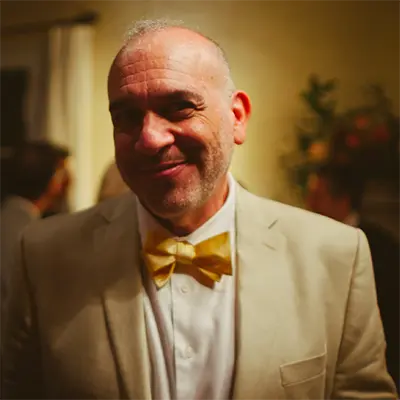
Years later, that childhood encounter inspired Kirby to design a course that examines how vampire stories reflect deeper questions about humanity, morality, and myth. The Vampire in Folklore, Fiction, and Film (CLA 325) explores depictions of these mythical creatures throughout history, from the ancient Mediterranean world to modern novels and movies. At the heart of the course is a cultural and psychological inquiry: Why can’t we get enough vampires?
“For me, what makes a tale ‘mythic’ is its enduring ability to tap into the symbolic values of the culture from which it springs,” Kirby said. “And in the case of vampires, what lends them their power is that they are at once both uncannily similar to ourselves and also profoundly, mysteriously ‘other.’”
Exploring these myths allows students in Kirby’s class to ask the same questions that have preoccupied humans since antiquity. “Vampires—like the study of classics in general—give us a way of connecting our past with our present, and a way of looking at our future,” Kirby said. “Is reality only what we ourselves can see? Is it possible to violate the laws of nature? Do humans have a ‘soul’? What does it mean to be human?”
For the longtime classics professor, teaching at the University is both a privilege and a delight. “My students are a constant joy. That is no exaggeration. They are smart, energetic, and intellectually hungry,” he said. “They inspire me, without fail, to look in new ways at the ancient texts and cultures that I teach. What educator could possibly ask for more?”
