The music world is always changing. But it may never have been in such a state of flux as it is now, as the surging use of artificial intelligence generates a flood of AI-generated music and raises crucial questions about musical creativity, the role of artists, and a host of other issues that promise to profoundly affect the future of music.
These seismic shifts inspired the Frost School of Music to create a partnership with The Hollywood Reporter (THR), one of the country’s top entertainment media outlets, to examine the public’s thoughts on music and AI and other key issues. The two organizations created an exclusive, nationally representative poll of 2,244 U.S. adults, administered by leading decision intelligence firm Morning Consult. The THR/Frost School of Music Future of Music Poll was a groundbreaking effort to understand the ramifications of AI, listening habits, pay for artists, and other forces.
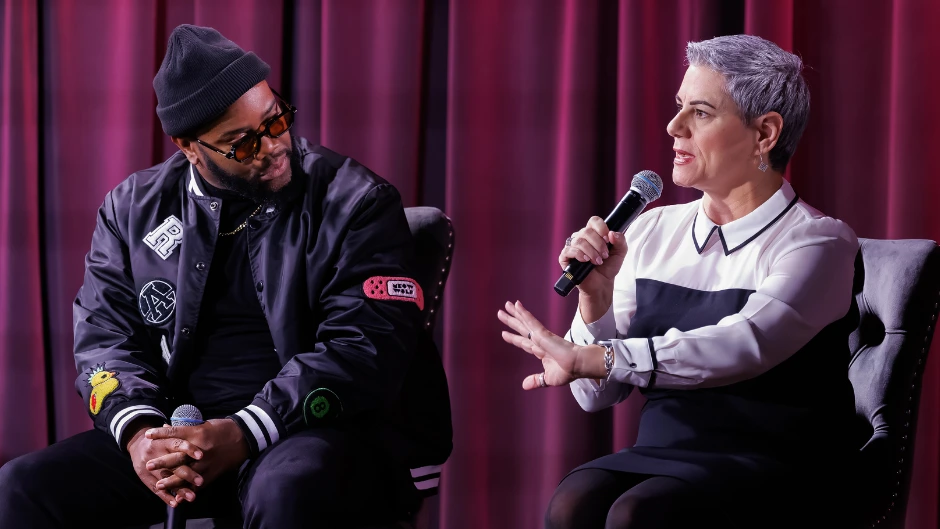
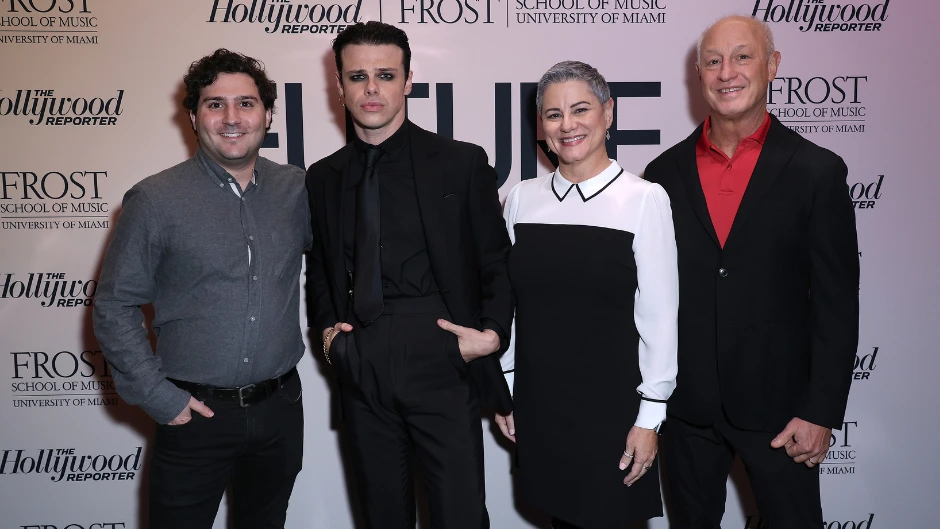
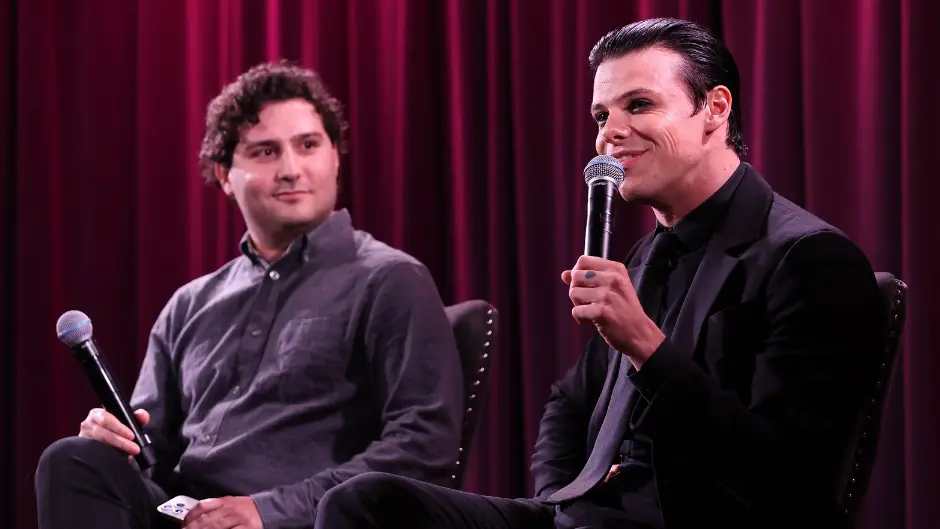
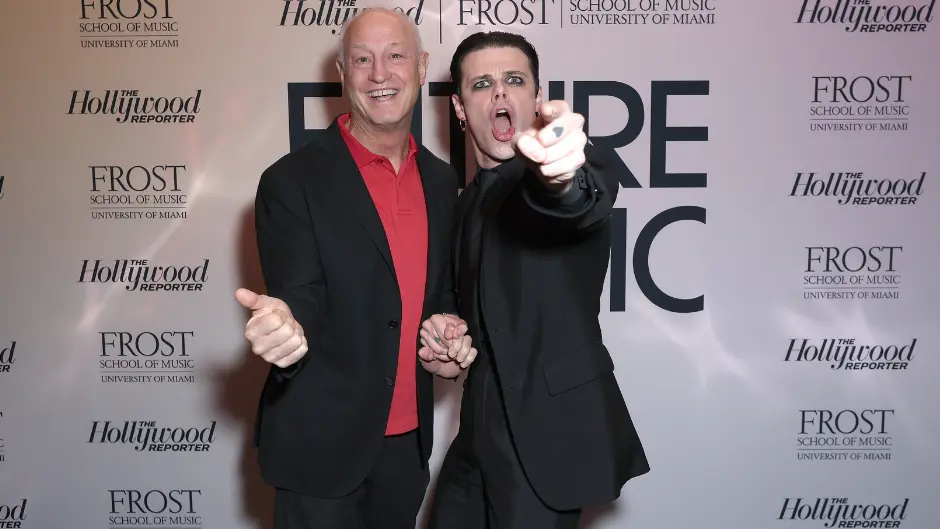
The issues it raised were further highlighted in a panel and reception for approximately 100 music industry leaders at the GRAMMY Museum in Los Angeles on Nov. 20. Attendees included industry executives, members of the Recording Academy, artists, Frost School donors, influencers, and media including Billboard and Rolling Stone. A highlight of the event was a keynote conversation between Yungblud, a British rocker with three GRAMMY nominations whose powerful music and maverick attitude have made him a sensation, and THR music editor Ethan Millman.
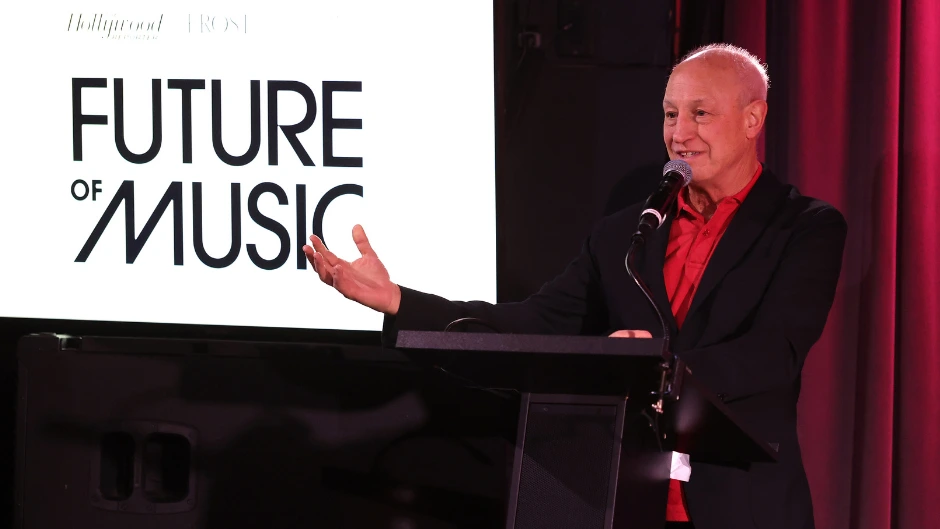
The THR partnership is the Frost School's latest endeavor under the University of Miami's Great Schools and Colleges Initiative, aimed at establishing the Frost School as a thought leader, not only in music education, but also in the broader music world.
“I don’t take the topic of the future of music lightly,” said Dean Shelton G. “Shelly” Berg, who welcomed guests to the GRAMMY Museum event. “I know how important music education is to opening our eyes to what’s possible as an artist and professional - and to make sure everyone can make a career doing it too.”
“Now we are examining what it means as AI has emerged as a force in the music world, and how to understand the best way to harness this new technology while maintaining music’s unique capacity to create authentic, personal connections with others.”
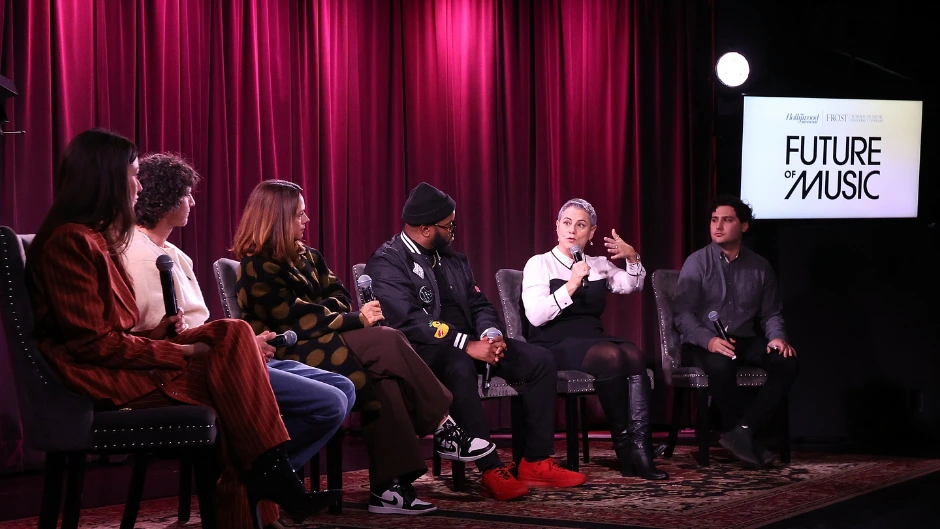
Both the poll and the panel were covered extensively by THR, generating millions of impressions on THR channels, and hundreds of millions on other media, led by Yahoo Entertainment. “AI Is Transforming How We Think About Music” announced the THR story on the poll, while the headline on the article about the panel trumpeted “AI’s Impact and Rock’s Revival: The Hollywood Reporter and the Frost School of Music Tackle Future of the Music Industry.”
Among the THR/Frost School of Music poll’s striking revelations about AI:
● 52% of respondents say they aren’t interested in listening to music created with AI, even if made by their favorite artist. 32% of respondents are interested and 15% don’t know.
● 66% of respondents say they never listen to music made with AI.
● 62% of respondents say that creators making AI music should get permission from the original artist when replicating their voice. 23% of respondents say they shouldn’t and 16% don’t know.
● Most respondents said that original music creators should be paid when their style is mimicked in the creation of AI-generated music, with 58% of Baby Boomers (born between 1946-1964), 52% of GenXers (1965-1980), and 50% of Millennials (1981-1996) feeling that way. Less than half, or 46%, of GenZers (1997-2012) agreed.
● Majorities in all age groups say that AI should not be used to create music without human contributions, with 75% of Baby Boomers, 63% of GenXers, 57% of Millennials, and 52% of GenZers holding that opinion.
The poll also asked where people found new music, with social media (45%), radio (44%), and recommendations from family and friends (34%) leading the list; and critics/blogs (7%) and awards shows (6%) at the bottom. Rock was respondents’ favorite genre at 22%, followed by country (16%), rap/hip-hop (14%), and pop (10%).
Artist pay was another survey topic, with pluralities agreeing that artists were paid fairly by streaming services and concert promoters. The subject of streaming service royalties is a hot issue in the music world, with most artists saying that the tiny fractions of a cent per stream that they receive has made it much more difficult to make a living.
The intricacies of how AI might affect this already complex scenario were a major topic for the panel, which included Frost School interim vice dean and chair of the music industry department Serona Elton; Myman Greenspan Fineman Fox Rosenberg & Light partner Audrey Benoualid; Range Music managing partner Evan Winiker; Isabel Quinteros, senior vice-president of marketing industry relations at Jen AI; and songwriter and producer Roahn Hylton.
Elton said understanding AI and other pivotal forces transforming the music world is crucial to the the school's work.
"At the Frost School of Music, we prioritize preparing our students for today and the future," she said. "There is no denying that the way we create and perform music, and the ways that listeners discover and experience music, are constantly evolving."
"At the Frost School, we know our students will succeed in their careers only if they understand how and why the future of music is transforming, how to take advantage of the new opportunities that are arising, and how to protect their rights and interests in the developing ecosystem."