As simulation education in health care continues to become more advanced, in-depth education for the instructors imparting their knowledge has become even more vital. Courses like “Improving Simulation Instructional Methods (iSIM)” help educators stay up to speed with rapid advances in simulation training technology by teaching them best practices for designing and delivering effective simulation, prebriefing, and debriefing activities in health care education.
Jeffrey Groom, a nurse educator at the University of Miami School of Nursing and Health Studies, has been teaching iSIM for many years at the University, where it has become a cornerstone for simulation education. “Given the fundamentals the iSIM course is grounded in, the course has remained very similar to its original design,” said Dr. Groom, who is also an adjunct faculty member with the Gordon Center for Simulation and Innovation in Medical Education at the University’s Miller School of Medicine.
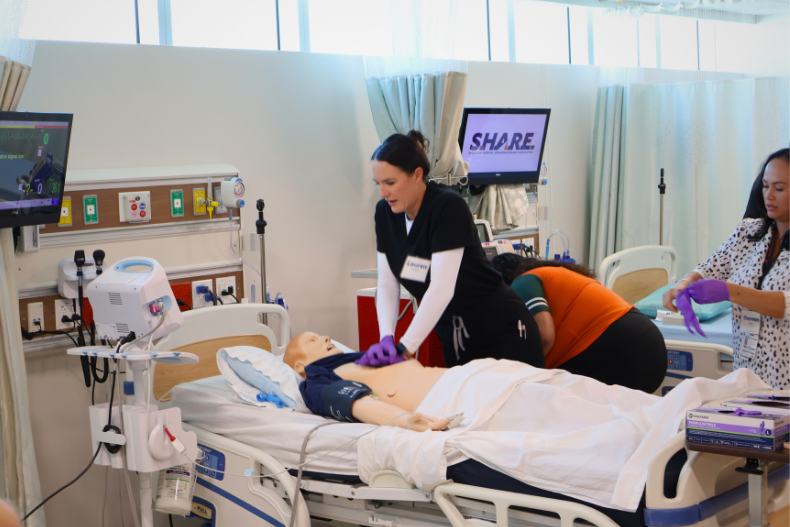
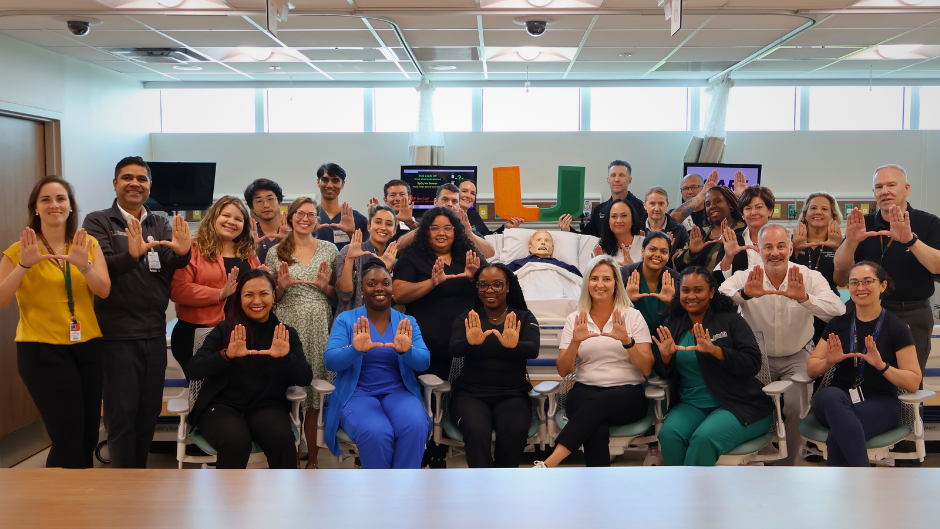
This summer Dr. Groom taught iSIM course at the school’s S.H.A.R.E. Simulation Hospital Advancing Research & Education®, where it is taught regularly. “The benefit of running iSIM here at S.H.A.R.E. is that our expansive simulation hospital environment mimics a wide range of health care environments for course participants, with all the equipment and expert technical support needed to make the training as realistic and beneficial as possible,” said Zuzer Calero, S.H.A.R.E.’s executive director of business operations. “One of S.H.A.R.E.’s core missions is to foster a welcoming and realistic environment where health care professionals from all specialties can safely learn from one another. The iSIM course exemplifies our dedication to the health care community.”
Dr. Groom started the two-day course with a presentation on the history of simulation education and then reviewed the BEME (Best Evidence in Medical Education) simulation study conducted by iSIM’s original creators from the Gordon Center and Winter Institute for Simulation, Education and Research (WISER) at the University of Pittsburgh.
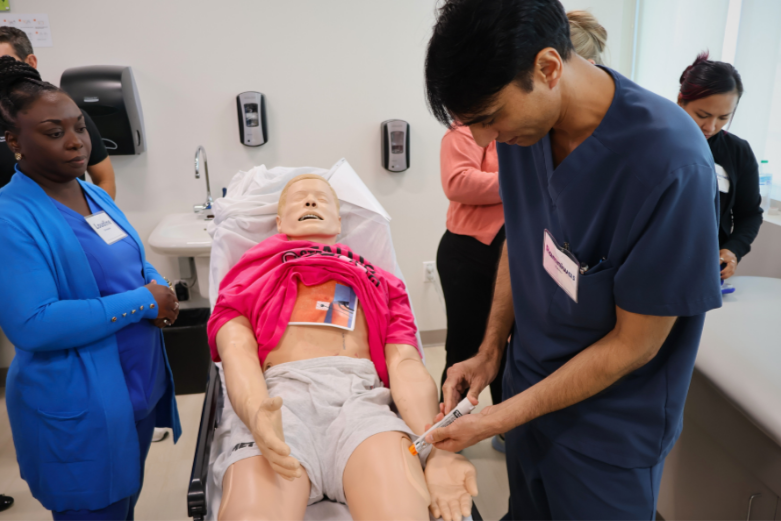
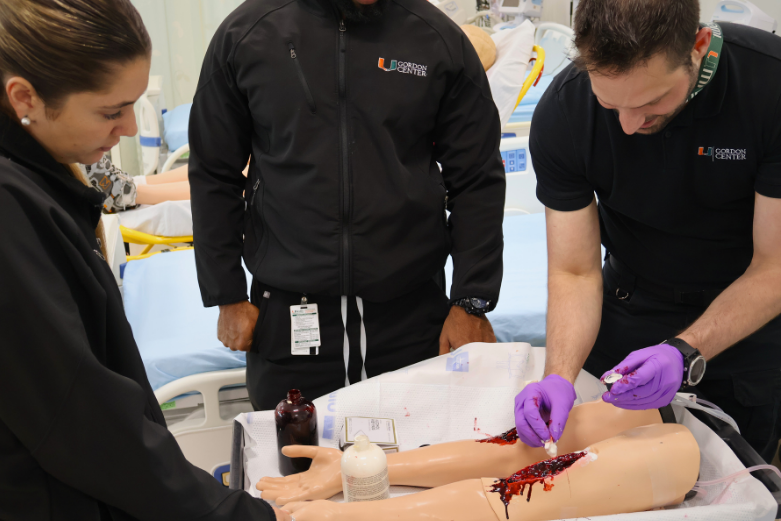
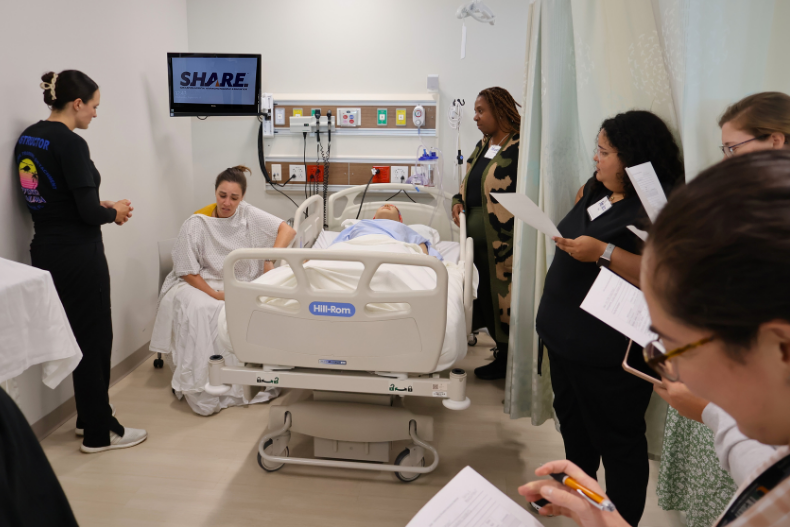
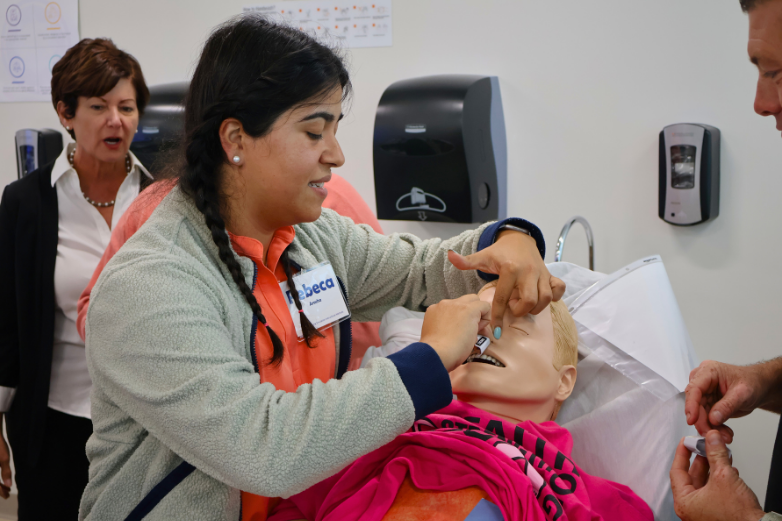
For the rest of day one, participants focused on creating scenarios for individual skills and medical procedures routinely performed by one person, such as assessing a patient, administering a medication, starting an IV line, making a clinical decision, and more. After each educator performed a scenario, another conducted a debriefing of the scenario, followed by instructor feedback on the design of the simulation, how it was run, and where it could be improved.
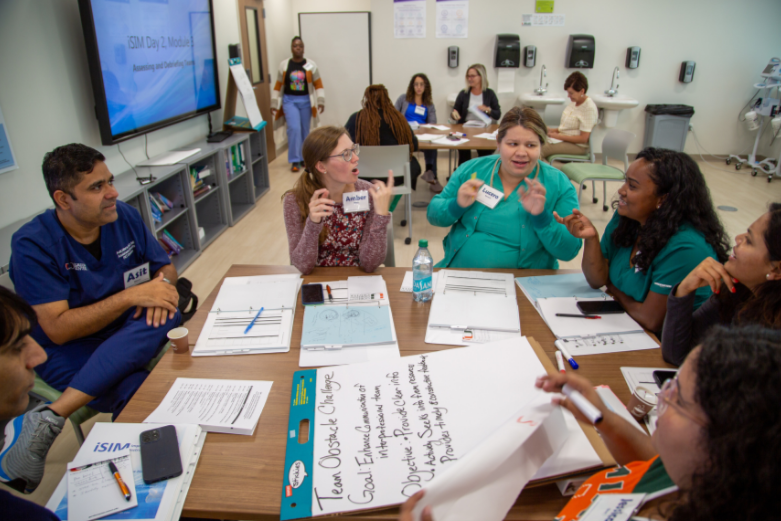
On day two, iSIM attendees practiced designing simulations where multiple skills must be performed on a patient by a group of health care workers, such as cardiac resuscitation, surgery, emergency childbirth, and so on. Advancing from individual to team-based scenarios enabled participants to test their clinical skills, medical knowledge, and teamwork coordination in a more high-pressure environment. The focus is less on medical accuracy than the key components of good teamwork, including leadership, followership, communication, situation awareness, and resource management.
Educators leave iSIM having been a planner, facilitator, and debriefer for many different simulation scenarios. They also receive templates to help them set up their own processes. “Many participants entered the course thinking simulation education is about dreaming up the most interesting and challenging clinical simulation,” said Groom. “Beginners tend to add in too many tasks and skills into the simulation, which only overwhelms the students they are trying to teach.”
In reality, he explained, simplicity is a key to successful simulation lessons. “Multiple shorter scenarios work better than long ones that have the possibility to go off the rails into skills students haven’t learned yet,” said Groom. “It is not unlike being in a lecture when the professor goes off on tangents and runs out of time to finish the actual lesson, when the material they didn’t end up covering is on an upcoming exam. Much the same way, students can’t afford for their instructors to go off topic in a simulation.”
Didier Torres, a S.H.A.R.E. simulation technologist who assisted Dr. Groom with teaching iSIM this summer, emphasized the importance of teaching communication between simulation technologists, educators, and students. Efficient simulation designs are crucial to participant success, and the more departments can work together smoothly, the better experience they will be able to give students, he noted. “It was a remarkable experience to witness different medical specialties come together to explore the benefits of simulation,” he said. “This course highlighted the importance of maintaining clear and concise objectives and simulation design.”
Dr. Deborah Salani, a School of Nursing and Health Studies professor of clinical and director of the Post-Master’s Psychiatric Mental Health Nurse Practitioner program, completed iSIM over the summer as a refresher. She first took it about five years ago. “I am always looking to improve simulation encounters for my students, so I attended to learn new and innovative strategies to implement,” she said. “I highly recommend this course. The instructors were great, and I learned how important it is to have a plan with specific learning objectives and a meaningful debriefing process.”