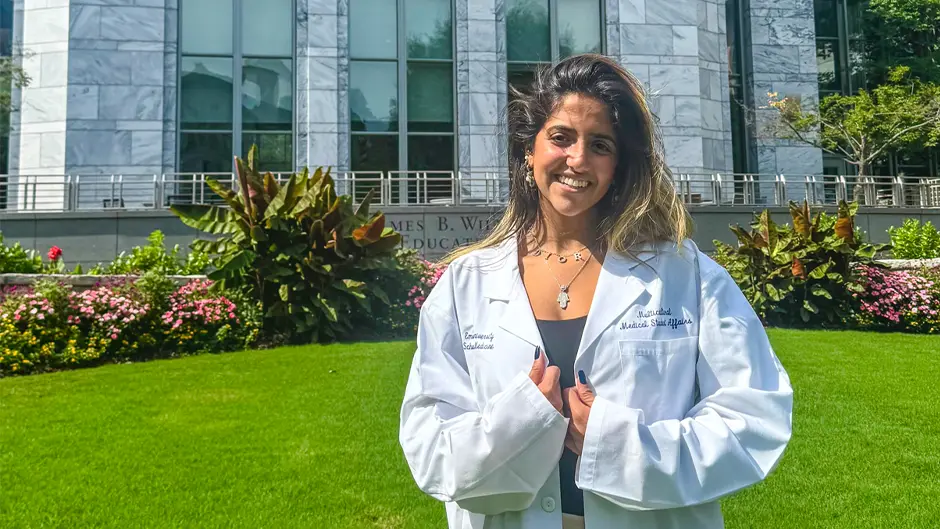
When University of Miami junior Ofek Gago was in middle school, she began getting stomach pains she could not ignore.
It was hard to digest most foods, and the once-stellar eighth grade student struggled to make it through a school day.
After a year of visiting doctors who downplayed her symptoms, one doctor listened to her closely, scanned her abdomen, and finally solved the mystery. Gago had a virus that had created an obstruction in her stomach. Following a short surgery, she was on the road to recovery, but the experience piqued Gago’s interest in medicine.
“That experience showed me the profound impact a physician can have on both a patient’s health and their day-to-day life,” said Gago, a biology major in the College of Arts and Sciences who is the first in her family to attend college. “Ever since then, I knew medicine was for me.”
Now, she is not wasting any time to further her education. After Gago completes her undergraduate education, she plans to attend medical school and wants to work as a cardiothoracic surgeon.
Last year, Gago completed a four-week observership at Baptist Hospital, shadowing surgeons and observing a 12-hour open-heart surgery, among other operations.
“Witnessing these life-changing procedures firsthand only solidified my commitment to becoming a surgeon, regardless of how long it takes me,” she added.
To guide her on this path, Jonathan Cola, assistant director of the Empower Me First programs in the Office of Academic Enhancement, helped Gago search for internship opportunities last fall. When they found a competitive program at Emory University School of Medicine, Gago applied and was later selected as one of 25 scholars in the Health Professions Readiness Education Program (HealthPREP) from an applicant pool of 500 students nationwide. In June, she moved to Atlanta and got a closer look at what it’s like to be a physician at Emory University and its Rollins School of Public Health.
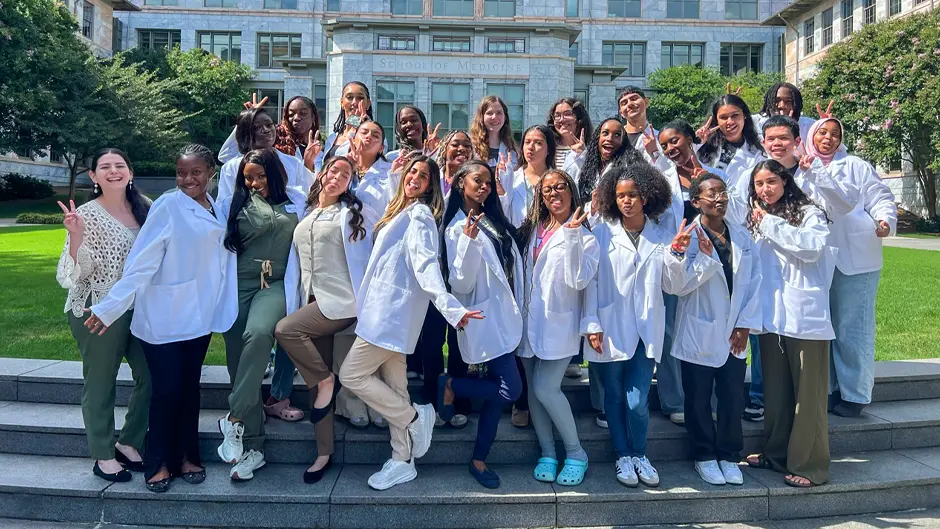
“I gained clinical shadowing experience at Grady Memorial Hospital, Emory University Hospital, and local clinics,” said Gago. “We also received MCAT preparation, engaged in public health seminars, did patient history simulations, and participated in interview and personal statement workshops led by Emory faculty and health professionals.”
As part of the program, Gago said there was also a research component, where each scholar had to select a topic of personal interest. Then, they received guidance in developing a research question, analyzing published studies, and creating a presentation. At the end of the program, each student presented their findings. Gago focused her research on medication adherence in heart failure patients and discovered that low-income patients who could not afford their medications often experienced worse health outcomes.
“I’ve gained valuable clinical hours, exposure to new fields in health care, and confidence in networking and interview skills,” she said. “The HealthPREP program truly helped transform how I view medicine, research, and my own journey as a future physician.”
Gago shared a bit more about the internship experience.
Where did you work as part of this program?
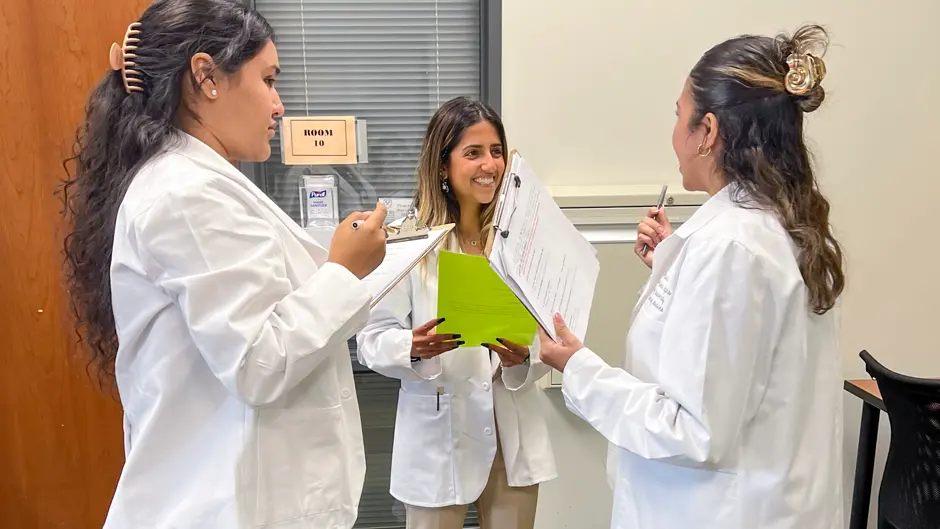
I worked alongside physicians in the fields of pediatrics, cardiology, family medicine, internal medicine, reproductive health, and neurosurgery. I also got the chance to become a student doctor at Morehouse clinic near Emory, and I was also able to try the Human Simulation Education Center at the Emory School of Medicine, where actors would present with “symptoms,” and we had to offer a diagnosis. These opportunities allowed me to gain exposure to the realities of health care, research, and how to approach patients.
What was a typical day like in HealthPREP?
A typical day began at 9 a.m. and concluded around 5 p.m., with a structured schedule that combined lectures, guest speaker sessions, and hands-on experiences. We attended talks from medical students and admissions committees from Emory’s School of Medicine. We shadowed residents and physicians at the hospital and completed daily reflection surveys. The program also incorporated MCAT preparation. This provided me with an authentic understanding of both the challenges and rewards of the medical field.
Where were you living?
During the internship, I received a stipend for food, travel, and on-campus housing, which allowed me to fully immerse myself in the experience without financial concerns.
How did this experience align with your goals?
It gave me the opportunity to see medicine in practice, to understand the complexity of patient care, and to connect my biology studies to real-world applications. I also gained a deeper awareness of the socioeconomic barriers that many patients face, particularly in underserved communities in Georgia and beyond. This connected strongly with a previous experience in Kona, Hawaii, last winter break, where I volunteered in underprivileged communities and saw firsthand how limited access to health care impacts lives. These experiences strengthened my commitment to becoming not only a skilled surgeon but also a physician dedicated to helping underserved populations and making meaningful change in the health care system.
How did the experience help you grow?
As a first-generation student, I have always been independent and relied on myself to find the answers to my own questions. However, this program taught me the value of collaboration and broadened my perspective. It strengthened my critical thinking and problem-solving skills, taught me how to adapt in unfamiliar situations, and improved my ability to work effectively within a team. These lessons will continue to serve me through my premedical studies and eventually, in medical school.
Would you recommend this internship?
I would highly recommend this experience. It offers the chance to step out of the classroom and gain direct exposure to the medical and scientific fields. For anyone interested in medicine or health care, it is a transformative opportunity. What made it even more special were the people I met; friends, mentors, and peers who I can always turn to for support, including the director of HealthPREP, Vanessa Fleites, who is a UM alumna. Although I attend the University of Miami, now Emory will also hold a special place in my heart for the memories, lessons, and relationships that shaped me during this program.