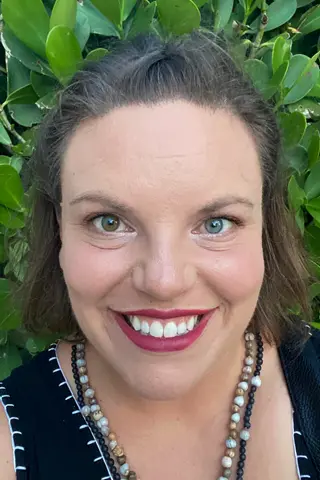
Kate Arnold, a doctoral candidate in teaching and learning and already a working teacher, became fascinated with Turkish culture years ago and has aspirations of one day researching the country’s educational system.
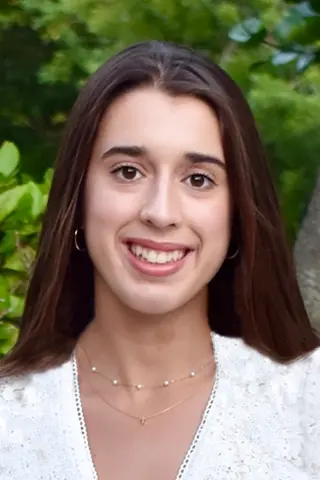
Carolina Juara, a junior pursuing a double major in international studies and computer science, has been looking for a way to study Russian and plans one day to enter the foreign service.
Both students, along with three others, formed the largest cadre of University of Miami students ever selected for the competitive U.S. State Department Critical Language Scholarship (CLS) Program. Applications open again in October for next summer and close in mid-November.
Each summer, more than 500 American students enrolled at colleges and universities across the United States spend approximately eight weeks studying one of a dozen languages either overseas or virtually. Participants gain the equivalent of one year of language study, as the CLS Program maximizes language and cultural instruction in an intensive environment.
The Prestigious Awards and Fellowships unit in the University’s Office of Academic Enhancement (OAE) supports students in the application process, helping to polish and professionalize their submissions.
“The CLS is a great opportunity for students who are interested in a unique summer experience to learn a language, and there’s a tremendous value in that it prepares them going forward for graduate school or their careers,” said Erika Green Liberus, director of the unit in the OAE.
The program is open to first-year through graduate students. Students need not be language majors—in fact, no prior language experience is needed for the virtual component—there is no GPA minimum, and no letters of recommendation are required.
“Your candidacy depends on how well you can articulate this experience being integral to your academic and career goals,” explained Molly Lockwood Ho, associate director of programs in the same office.
Arnold, who grew up in a small town in Pennsylvania, has studied and taught abroad previously. She’s in her third year of doctoral studies at the School of Education and Human Development and earned a B.A. and M.A. at other colleges.
She had a Turkish friend and thought she might impress his mother by learning a few basic words in the language.
“But then I started really getting interested in Turkey’s educational system and now have the long-term goal of returning to research curriculum studies,” Arnold explained. She spent 18 months prior to leaving for Istanbul using an online learning app and is confident that the immersion program, where she lived with a host family as she studied and traveled the Middle Eastern country, greatly improved her language proficiency.
“I definitely recommend the program. While it’s more heavily marketed to undergrads, it’s ideal for a doctoral student like me, who has done research and has a different lens as an older person,” Arnold said.
A highlight of Arnold’s adventure was her visit to Kona, a city off the tourist map, where she witnessed an authentically performed dance of the whirling dervishes, an aspect of the unique Sufi culture in Turkey.
Juara, who speaks Spanish but had little prior experience in Russian, was assigned to the virtual program. Her cohort met two hours daily Monday to Friday for eight weeks this summer for language instruction and cultural learning focused on Moldova, a neighbor country to Russia that shares linguistic roots.
“I absolutely loved the program. Our teacher, Dadia, was so understanding of the fact that we were new to the language, and she made it so fun,” said Juara.

“I hope to work in government or national security one day, so I was looking for ways to learn Russian, and the University doesn’t offer any courses,” she added. “The fact that the CLS was fully funded by the U.S. government was a huge plus.”
Daniela Romero, a sophomore majoring in health science, attended the virtual program for Japanese. A Miami native and daughter of Venezuelan parents, Romero has held a long interest in Japanese culture.
She found similarities, especially in pronunciation, between the Japanese and the Spanish she knew, yet Japan’s three alphabets posed a challenge. Still, she’s confident in the progress she made.
Romero especially enjoyed bonding with her peers from around the country. The group has continued to stay connected through a group chat.
With the time difference with Japan, Romero’s cohort attended two hours of classes daily in the evening with Fridays devoted to cultural activities.
Romero hopes one day to visit Japan to see in person the temples and other sites that her cohort learned about.
Hema Kondur, who holds a doctorate in biology and is in her fourth year pursuing a medical degree, grew up in Georgia, the daughter of Indian parents.
Kondur has already spent 15 years researching HIV/AIDS with a special focus on minority populations and global public health. She’s confident that the progress she made studying Hindi in Jaipur, in the Indian state of Rajasthan this summer, will benefit her research.
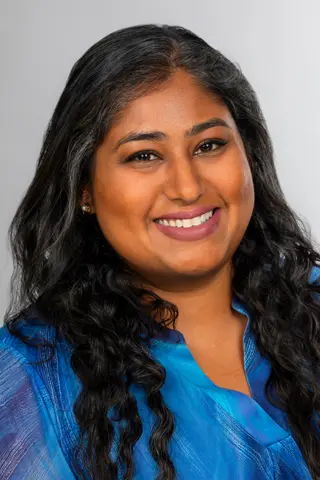
“With health care, there are so many nuances with language and cultural humility that help set a tone of trust between provider and patient. I’m not yet fluent in Hindi, but through this program I’ve really progressed in so many ways that will help me connect with Hindi-speaking patients.”
Kondur grew up learning “a little” Hindi and took two beginning level classes in college. She was assigned to the advanced level of her cohort.
“I was studying 4 to 5 hours a day—the program was really rigorous—and sometimes I was thinking that this is even harder than med school,” she said.
Despite the rigor, she loved the program and the weekend opportunities to travel. In addition to the language immersion, she studied a form of Indian painting and art and reconnected with an 83-year-old aunt who lives in India.
“I got so much from the experience. One of my classmates described it as being on a submarine for two months,” she said. “We saw each other for hours every day. And as the oldest student in our group, I was so inspired to see the passion of the younger students and how motivated they were.”
Yaliza Gutierrez Nunez, a doctoral candidate in language and literacy learning, attended the Portuguese immersion program in Brazil as part of the University CLS cohort.