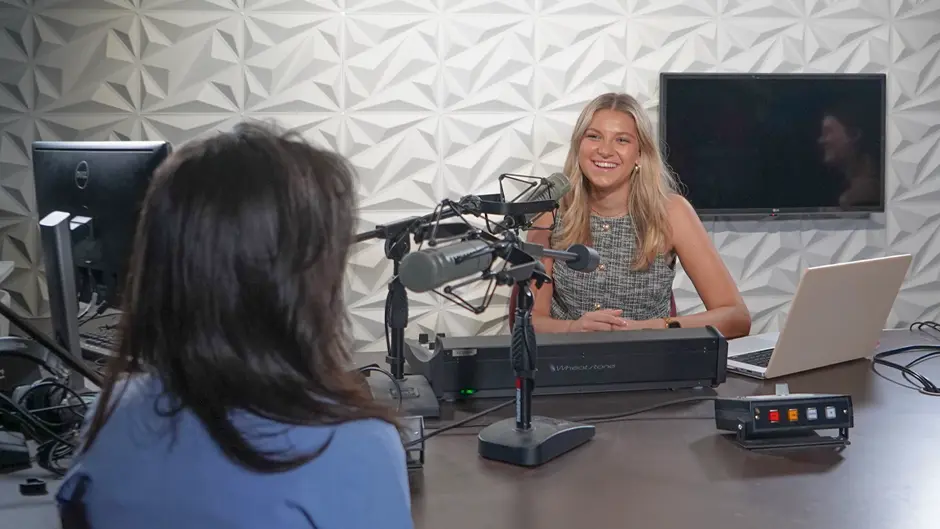
The School of Communication has teamed up with Telemundo to give students real-world podcasting experience creating bilingual content, from pitching ideas to recording episodes that will be published online.
Trevor Green, a senior lecturer and director of graduate studies in journalism and media management, is spearheading the project with Sallie Hughes, department chair of journalism and media management.
“The partnership grew out of ongoing conversations between the School of Communication and Telemundo Studios about creating more direct industry pathways for students,” Green explained. “Telemundo was expanding its audio storytelling strategy and was looking for emerging talent capable of producing bilingual and bicultural content. At the same time, we have a strong group of student creators interested in podcasting and documentary storytelling.”
With podcasting on the rise, as seen by the popularity of Alex Cooper’s “Call Her Daddy” and Alix Earle’s “Hot Mess With Alix Earle,” media companies and students alike are looking to break into the industry.
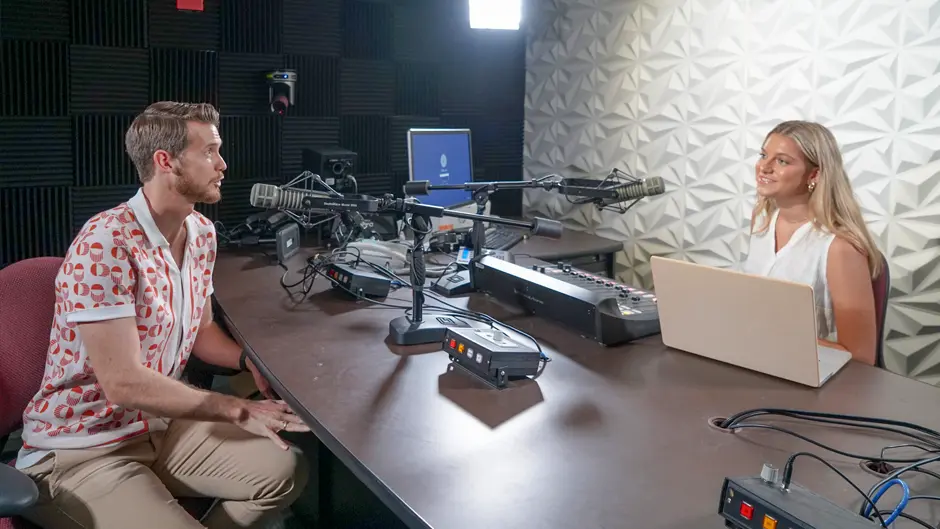
Students directly collaborate with Telemundo's production team on their work while in an “incubator” as part of a podcasting class at the School of Communication.
“The incubator gives students hands-on, professional experience inside a real industry workflow,” said Green. “Students pitch projects, develop show concepts, write scripts, record and edit episodes, and receive direct feedback from Telemundo Studios’ producers and executives.”
The class is open to students across majors, not just journalism students—no production experience required.
“Even if you don’t think podcasting is your thing, everyone has something to say and something worth sharing,” said Juliana Warnock, a senior studying public relations and broadcast journalism. “In my class, we had podcasts on everything from health and wellness to sports, Miami culture, parenting advice, and even spooky places in the area. This variety shows how the program supports all kinds of ideas, and I couldn’t recommend it enough for anyone who wants to express themselves or explore a topic they’re passionate about.”
Beyond the creative freedom, students are gaining professional skills that translate directly to the workforce.
“This partnership reflects the University of Miami's commitment to giving students real-world experiences that prepare them for success in today's media industry,” Green said. “Working alongside Telemundo professionals gives our students invaluable hands-on experience, helping them build confidence and learn how to tell authentic stories that connect with audiences in both English and Spanish. It's exactly the kind of collaboration that prepares them for successful careers in media.”
For Warnock, the opportunity to work with industry professionals has been transformative.
“It allows the content we create in class to be seen beyond the classroom, giving it real visibility and purpose,” said Warnock. “Receiving feedback from the Telemundo team, in addition to Trevor, has been extremely rewarding and has helped me grow the kind of content I want to create.”
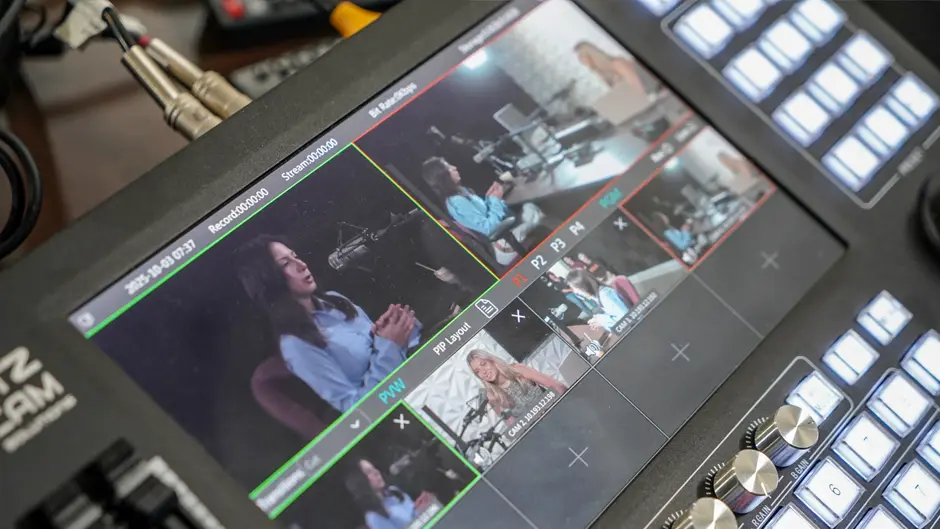
The partnership reflects broader shifts happening across the media landscape. As traditional broadcast networks expand beyond television, they’re investing heavily in audio storytelling and multiplatform content—particularly for younger, bilingual audiences.
“The journalism and media landscape is increasingly multiplatform, bilingual, and audience-driven,” said Green. “This incubator not only reflects that shift, but directly prepares students to work in it: they are learning to produce stories that can live across audio, video, social, and streaming platforms, while also exploring stories that speak to [Latino] and multicultural identities that are shaping the future of American media.”
At the end of the semester, students’ podcast episodes will be published online by Telemundo Studios, giving them professional portfolio pieces and bylines.
Students interested in getting involved in the program can reach out to Trevor Green at trevorgreen@miami.edu.
