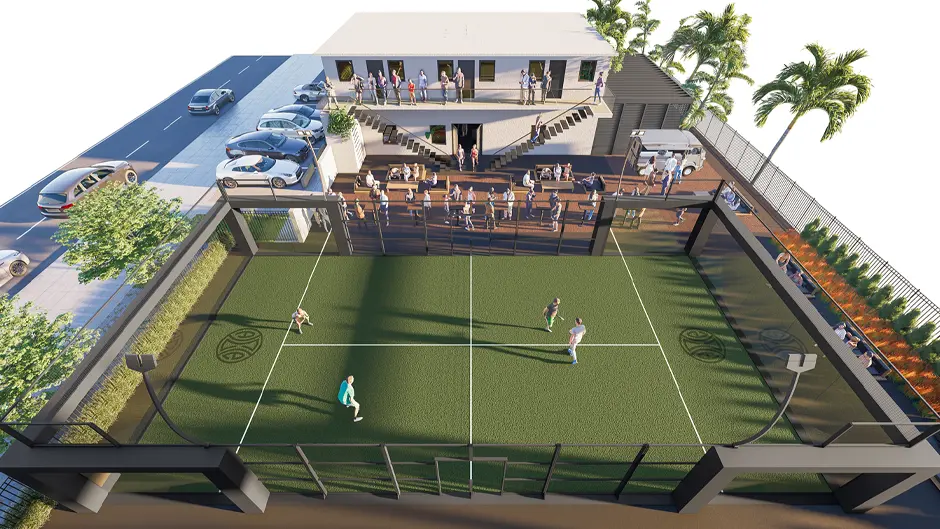
Kian Nesari was a first-year student in high school, playing tennis competitively, and attending one of Spain’s premier tennis academies when he first picked up a padel racquet. The fun, fast-paced court game was an energetic respite from the rigorous schedule at the Academia Sánchez-Casal boarding school for elite student-athletes—and Nesari took a quick liking to the sport.
His passion for padel—a hybrid of tennis and squash played in teams of two on an enclosed court—continued to grow and, a few years later in the fall of 2022, when he began attending the University of Miami, he promoted the sport to friends and classmates.
“The sport has been blowing up in Miami since the first clubs opened. Once I realized that padel existed in Miami, I made it a point to introduce the sport to nearly all my friends,” Nesari said. “The retention rate was extremely high, and people immediately got hooked.”
He continued to generate student support and, by the spring of last year, a student club formed. Canes Padel was approved in the summer and launched last fall. Membership this semester has swelled to 200.
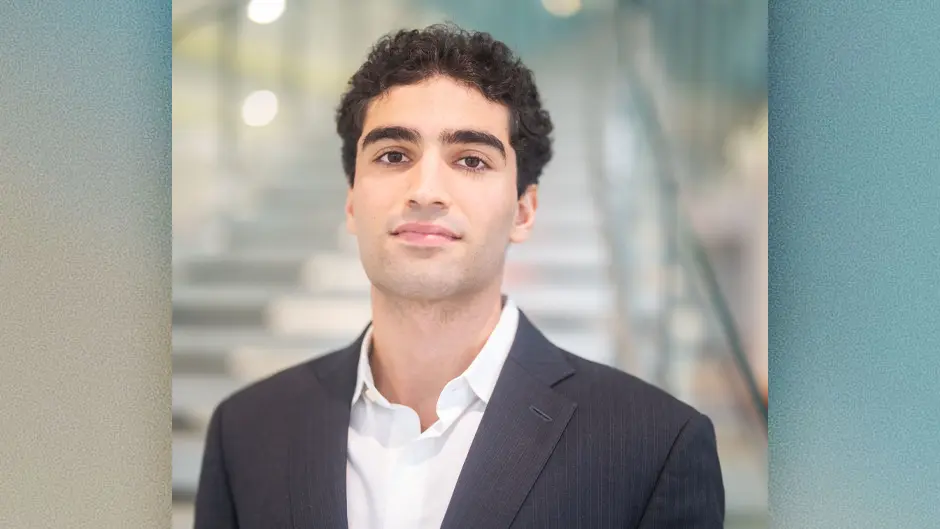
Nesari, who graduated this past December with a double major in finance and health management from the Miami Herbert Business School, passed the club presidential reins to Jack Paterson—formerly the vice president—yet remains engaged as an alumnus helping to support the transition phase.
Enthusiasts claim that padel is the fastest growing sport in the world, with 25 million players now spread across 78 countries. Launched in 1969 in Mexico, padel spread to Argentina, and then Spain. With its roots in those countries, it’s easy to understand how Miami has become the U.S. hub for the sport.
Padel’s cultural roots, its sociability, and the fact that it seems to be, like pickleball, a sport for these times all contribute to its popularity, Nesari said.
“With padel, you feel like an athlete right away. It’s a sport easy to get into and pick up, but very difficult to master,” Nesari said.
“It also connects with this generation where, instead of watching full-length movies, everyone is switching to shorter forms of entertainment,” he added. “Tennis and golf have the barrier of taking years to get good at, and lots of people don’t have the attention span or resources for that. Padel gives kids that initial push they need to keep coming back.”
Padel’s social aspect, too, adds to its appeal.
“The courts are smaller than tennis, so there’s more interaction, and padel is almost always doubles play, so you’re always going to have a partner. The social part just happens naturally,” Nesari explained.
Yet despite its growing local popularity, the distance to the nearest courts in Wynwood, downtown, or near the cruise ships has limited access for University students.
That net is about to come down.
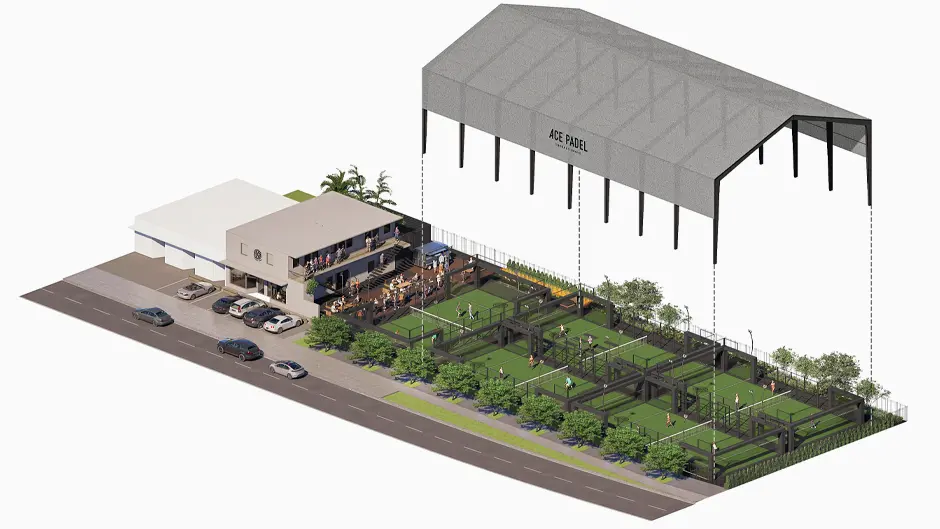 A trio of alumni—Tyler Fan, Alec Yarnoff, and Jorge Alvarez—are part of an ownership team that purchased land in Coconut Grove to build a luxury padel club. Construction for Ace Padel Coconut Grove began in December, and opening is targeted for late this spring.
Fan, who earned a finance degree in 2016; Yarnoff, who earned a finance degree in 2023; and Alvarez, who earned an undergraduate degree and law degree, met postgraduation through their jobs with Aventura Asset Management.
Like many who come to the sport, they were former tennis players who converted to the fast-and-furious court game.
Yarnoff was a lifelong tennis player, competitive in high school when he came to the U to study. He had played a game similar to padel in his native Philadelphia.
Fan was introduced to the sport several years ago while at the U.
“A friend invited me to play at the courts in Wynwood. I played once or twice and loved it, but the traffic to get there to play was a nightmare, so I just didn’t get into it,” Fan said.
Yarnoff joined the management firm with Fan in 2023. By then the sport had created quite a local buzz and Yarnoff, who was playing a lot, revived Fan’s interest.
The trio entered into a joint venture with Ace Padel, a social sports entertainment firm with experience building courts and promoting the sport worldwide.
“We combined our passion for padel with our focus and opportunities for real estate—so, obviously it was a great fit,” Fan said. “There was nothing in Coconut Grove—the closest courts were at Padel X in the downtown—that was the start of the process.”
Unlike other Miami clubs operating on temporary event permits, Ace Padel purchased the land on Grand Avenue near Douglas Road in Coconut Grove and so will have a permanent construction.
“A big differentiator for our courts will be the canopy to fend off the summer rain and sun,” Yarnoff explained. “‘The lob is one of the most important shots in padel and so requires super high ceilings. Our canopy is 32 feet at its lowest and goes up to 42 feet, and there are side skirts that come down to fend off rain from the sides—it’s the perfect outside playing environment.”
“You couldn’t get a more convenient location for students; this will allow them to play more often,” said Fan, adding that the venture is intent on creating special incentives for University students, especially given that the sport can be an expensive pastime.
The Canes Padel board held its first meeting of the semester in late January, and the club has cleared some important hurdles over the past semester—most notably securing partnerships with strong brands and venues—Nesari said. Additionally, school funding approvals have made padel more accessible; most practice sessions are now free for students.
