Topic: College of Engineering


From kung fu to consciousness
First-year Stamps Scholar Artiom Peshkur hopes to spend his career pursuing answers to some of humanity’s most enduring questions.


Helping AI recognize when it does not know the answer
Using mathematics inspired by quantum physics, University of Miami researchers are developing ways to identify when AI-generated answers may be unreliable.


Investing in climate resilience
The Resilience Finance Lab, an initiative of the University of Miami’s Climate Resilience Institute, will bring together experts across sectors to develop the market infrastructure needed to fund projects that reduce environmental and disaster risks.


An ‘umbrella' for coral reefs
Three engineering students from the University of Miami created a solution to help protect delicate corals from harmful UV rays and hope to conduct more large-scale testing in the ocean soon.


University of Miami engineers lead efforts to improve Miami-Dade wastewater infrastructure
Researchers analyze real-time data in sanitary sewers across Miami-Dade County to help identify problem areas.


A new approach to alleviating dry eye
A study led by a team of University of Miami researchers aims to understand whether improvements in indoor air quality can help relieve symptoms of dry eye disease.


Improving underwater exploration through sonar imaging
A Navy-funded project awarded to engineering professor Shahriar Negahdaripour uses sonar imaging and artificial intelligence to improve underwater mapping and exploration.


Tracking sargassum at sea
University of Miami scientists, collaborating with a local aerospace and technology company, have developed and deployed high-tech drifters to predict the seaweed’s path to shore.


For biomedical engineering students, Italy became the classroom
Students spent six weeks in Florence earning academic credit while exploring how engineering, medicine, history and culture intersect beyond the classroom.
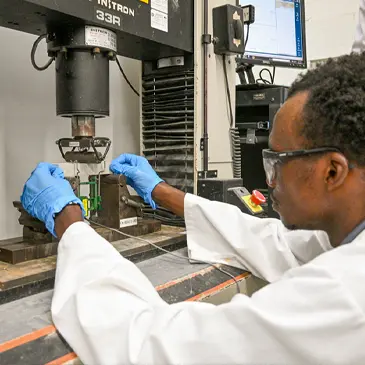
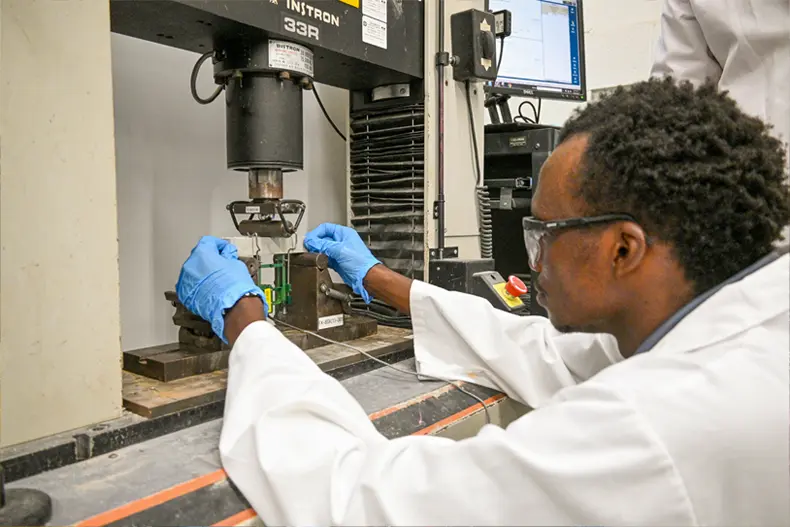
Gaining firsthand research experience
As part of a prestigious Research Experiences for Undergraduates program, 17 students spent the summer working in physics and engineering labs across the University of Miami.


A pioneer on the AI legal frontier
The Miami Law and AI Lab, an interdisciplinary work team, is researching and developing tools to improve efficiencies across the legal domain and educating a new generation of lawyers on the ways that AI is impacting the profession.


University of Miami engineers selected to advance rare-earth mineral recovery
The U.S. Department of Energy’s Genesis Mission will support research to help recover critical elements from discarded materials using artificial intelligence and advanced magnetic technology.

