Science and Technology


With El Niño in play, hurricane researchers zoom in on the Pacific
University of Miami oceanographer Lynn “Nick” Shay is using data gathered from Hurricane Polo to study ocean-atmosphere interactions and the elusive surface drag coefficient that helps determine the wind stress of tropical cyclones.


Building safer, more sustainable housing
A collaboration between the University of Miami, Resilient Cities Catalyst and the Ministry for Grand Bahama will offer new and resilient housing to workers and returning residents.


Investing in climate resilience
The Resilience Finance Lab, an initiative of the University of Miami’s Climate Resilience Institute, will bring together experts across sectors to develop the market infrastructure needed to fund projects that reduce environmental and disaster risks.


An ‘umbrella' for coral reefs
Three engineering students from the University of Miami created a solution to help protect delicate corals from harmful UV rays and hope to conduct more large-scale testing in the ocean soon.


Reconstructing the Great Miami Hurricane of 1926
A century after the historic storm devastated South Florida, a University of Miami scientist has created new wind field maps that offer a detailed visualization of the massive cyclone that not only changed the region forever but also inspired the nickname of the institution that opened shortly after it struck.


Can AI agents learn from middle school students?
A new generative AI-powered learning tool will be tested in Florida middle schools to help students strengthen math engagement and achievement.

Building more resilient coastal cities
School of Architecture and South Florida planning and design leaders joined the Ambassador of Denmark to discuss resilient waterfront design and sustainable coastal development.

University researchers take over ‘The Academic Minute’
University faculty members shared their expert insights nationally through “The Academic Minute,” a radio program and podcast featuring researchers from colleges and universities around the world.


A pioneer on the AI legal frontier
The Miami Law and AI Lab, an interdisciplinary work team, is researching and developing tools to improve efficiencies across the legal domain and educating a new generation of lawyers on the ways that AI is impacting the profession.

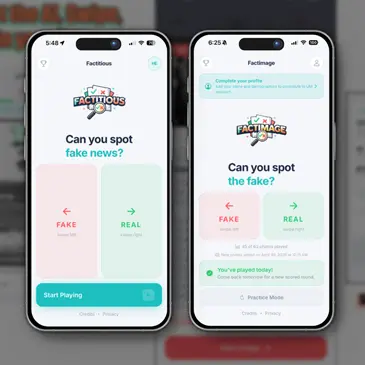
Can you spot fake news or images?
A University of Miami professor has developed two apps to test your knowledge in telling apart real or fake images or texts.


Canes featured on ‘Now We Know! With Steve Guttenberg’
Students and faculty members at the School of Architecture shared their expertise in architectural design on the CNBC educational television series.

University of Miami
Coral Gables, FL 33124
305-284-2211
University of Miami
UM Network
Tools and Resources
Visit
Connect